
AI vs. Voiceover? Author Aaron Ryan on the Future of Creative Careers
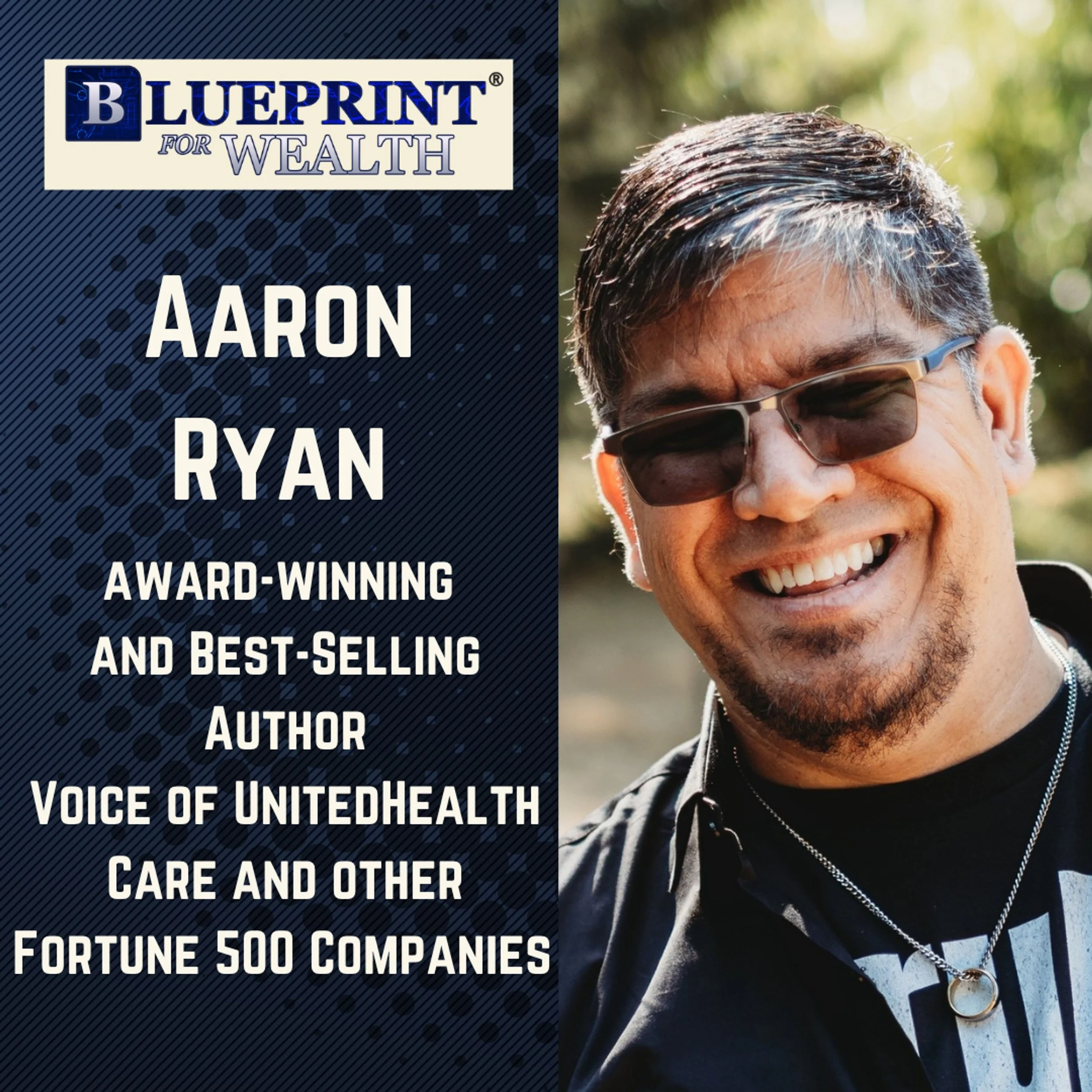
Wayne Zell talks with Aaron Ryan about his literary journey, the evolution of his "Dissonance" saga, and its adaptation for streaming. They discuss his children's books, marketing strategies, nonfiction work, and voice-over career, touching on AI's impact on industries and self-publishing advice.
Key Points
Creativity nurtured from a young age can lead to lifelong passions and unexpected career paths.
Marketing a self-published book requires genuine enthusiasm and leveraging personal networks, even when support from close friends and family might be limited.
The evolving landscape of AI presents both challenges and opportunities for traditional creative industries such as voiceover work and book publishing.
Timestamps
0:00 Introduction to the podcast and guest Aaron Ryan
1:14 Aaron Ryan's literary journey and "Forecast" overview
2:28 "Dissonance" saga evolution and adaptation for streaming
5:08 Writing style and availability of the "Dissonance" series
7:29 Aaron Ryan's children's books and personal storytelling experiences
10:40 Marketing strategies and literary comparisons
13:05 Aaron Ryan's nonfiction and voice-over career
17:29 Global issues influence and marketing self-published works
22:56 Creative journey and the impact of AI on industries
28:01 Screen adaptation process and advice for self-publishers
34:00 Connecting with Aaron Ryan and closing thoughts
Quotes
"Be yourself. Everyone else has already taken."
- Aaron Ryan
"My focus was to have voiceovers pay our mortgage and to have this 880 square foot shop converted to a two thirds playroom, one third office and booth that's totally professional. Done."
- Aaron Ryan
"I am inordinately proud of dissonance and how it just burst out of me, how it matured so much over the sequence of books."
- Aaron Ryan
Transcript
Wayne Zell: Hi. This is Wayne Zell, and welcome back to Blueprint for Wealth. It's a half hour fast paced podcast that's designed to help you realize your personal dreams of wealth and freedom. And who better to talk to than an author of science fiction and and other nonfiction books who's basically lived out his dream of being a journalist, and that is Aaron Ryan. Welcome to our show today, Aaron.
Thanks for being a special guest.
Aaron Ryan: Yeah. Thanks for having me. I appreciate it.
Wayne Zell: I think it's pretty cool that, you are able to make a living and do what you do as an author. How did you become an author? How did you become a published author?
Aaron Ryan: Well, so a minute ago you hinted at the fact that you could get paid as an author. I I don't did I miss something? No money's come my way yet. Yeah, it's well, I mean, it was fostered in me early on. I feel very, you know, parents that really, instilled creativity in me.
Uh-huh. And, it was actually like a second grade assignment, so everyone did it back in 1981. Just tells you how old I am. And, it was construction paper. It was crude college, you know, lined three hole punch paper, stick figure drawings and everything.
I called it the electric boy. And what's so funny is that I've really discovered lately as an epiphany, I've come full circle with my latest book Forecast, which is a weatherman around February. He gets struck by lightning and he's imbued with powers. That's kind of exactly what The Electric Boy was about. Literally sat back and went, woah.
I'm literally writing The Electric Boy all over again.
Wayne Zell: Who's it for? Who's the audience?
Aaron Ryan: Definitely a thriller. It's a a man who is able to eventually prevent nine eleven. He sees everything as we've seen it for the past twenty four years in terms of footage, but he's able to prevent it. It is a sci fi thriller in
Wayne Zell: Tell us a little bit about dissonance. Dissonance is a first of all, Aaron's won a bunch of awards. It's a best selling, saga. It's not just one book. It's a series of books.
And I was fascinated. I started reading it, earlier, and it it's a great story. Tell us a little bit about the dissonance saga.
Aaron Ryan: Yeah. Well, I'm so pleased with how it turned out. I mean, it's you always want something to just turn out well, and it it was like well to the power of well plus well cubed. I just, I'm seriously grateful. So I I intended to write a single book, but much like an alien queen, the rest of it just burst out of me.
I had so much more to tell and, it turned into a trilogy and then it demanded two prequels and a sequel.
Wayne Zell: Oh my god.
Aaron Ryan: So it is now yeah. It's it's now actually referred to as a hexalogy of six books. Six books. It's grown and grown. It's now volume one which is the very first one I wrote but chronologically is the third in the sequence.
Wayne Zell: Kinda like Star Wars. Right? And so it's
Aaron Ryan: Yeah. Yeah. What is it that Star Wars is episode four? I I don't know. I don't even think George Lucas knew that when he started.
I mean, let's be honest. It's been adapted for the screen. It's being pitched to streaming networks, so I'm pretty excited about that.
Wayne Zell: Tell us a little bit about this story. This is this is fascinating.
Aaron Ryan: Well, so dissonance, volume one. I'm holding this up here. I'm kinda blurred probably. So there we we go. For anybody who's joining us via audio, if they can't see it, this is volume one and this is the creature on the front.
2026, we're going about our lives just like any other day. All of a sudden, all over the planet by the hundreds and hundreds and hundreds and hundreds of thousands, these things drift down silently out of the sky. We don't know what they are, but we find out they're not crafts or drones or ships or probes. They're beings, and they hang there for ninety days above the above the ground about 50 feet all over the planet. We think maybe they're angelic messengers because they're not attacking and all will be revealed in in due time.
Mhmm. Well, ninety days goes by. They all wake up in exactly the same time all over the planet. If that sounds coordinated, it is. They look down at us and they hiss, and it just kind of all goes south from there.
They're apex predators, and we eventually call them Gorgons because like Medusa the Gorgon, you cannot, under any circumstances, look them in the eye. Well, Well, it's all over. They have a telepathic paralytic, and so they're gonna immobilize you with your mind. You're gonna stiffen, and you're gonna you can't move, and they're gonna immobilize you, eat you at their leisure while you feel every agonizing bite. It's awful.
Oh my god. They they actually end up killing off eighty five percent of all mankind, by the way. The rest of us are living in these underground bunkers. The trilogy was set in 2042, '16 years after the invasion.
Wayne Zell: Okay.
Aaron Ryan: Then I went back and wrote prequels that that allow you to be there when they descend through the sky. It's from his dad's perspective.
Wayne Zell: Okay.
Aaron Ryan: When they attack, it's the most singly, the most terrifying thing I've ever written. I had to take a sabbatical afterwards and just suck my thumb. It was terrifying. What happens when they wake up finally is absolutely terrifying, and it was like, it's not it's not for the week.
Wayne Zell: Is it told from the perspective of a few characters?
Aaron Ryan: Really interesting question. I really prefer first person, narration that way, in storyline. So all of them are first person. However, the second prequel is actually told from four first person perspectives
Wayne Zell: Okay.
Aaron Ryan: Alternating because they're in four different places and they show the evolution of the uprising of the resistance. So that was hard to kind of go through and even harder in the audiobooks because I've gotta do all these different accents.
Wayne Zell: Voice over guy, you should be able to do that.
Aaron Ryan: I can do the accents. It's just that you have to maintain them through that chapter. And when they're speaking with someone else who does not have an accent, you got I mean, you're I'm all over the the map. So You
Wayne Zell: did all the voices? I did. And is it available on Audible?
Aaron Ryan: All of them are available in Audible, and there's also an omnibus edition, which is which is every like, all six books in one. It's fifty four hours of story.
Wayne Zell: Wow. And so, just on the dissonance series, there's a website.
Aaron Ryan: It's dissonancetheseries.com or you can go to getthesebooks.com.
Wayne Zell: Dissonance the series Com. Yeah. Because that's where I found it. And I went there and I downloaded. But I'm gonna I'm gonna do the whole, package because I I wanna know what happens in the end.
And you don't have to tell us what happens in the end because the listeners will be like, oh, I already know what happens in the end. I don't have to read it. Spoiler. Yep.
Aaron Ryan: Yeah. We don't wanna
Wayne Zell: we don't wanna do any spoiler. But, you know, is it a happy ending? Not really.
Aaron Ryan: I and I well, I had to. I I mean, I had to. It's really when you kill off 85% of mankind with Gorgons and then at the end of the saga, everyone else dies, that'd be a super depressing read. So we do have a happy ending, but the unfortunate news is in the sequel, there's a second wave headed towards Earth wondering they're wondering where the first wave went because we killed them all. And so the second wave is coming and we have to deal with it again, but it really plays like a Jack Bauer CTU 24 episode, that book, and I love it that way.
Wayne Zell: So, Aaron, you're also a voice over artist. Tell us a little bit about that. How did you get into voice over? And how does that kind of pay the bills right now? I mean, that's the bread and butter, right?
Aaron Ryan: Yeah, actually, yes. So voice over has been a part of my life professionally for about twenty years. I was always interested in it. So back in the day, before doing voice over was as accessible as it is now because of the internet, you had to live in one of the big four markets, New York, Los Angeles, Chicago, or Dallas. And I was living in Denver. So it was never in the cards for me. I was interested in it, but I didn't really, you know, think it would come into fruition until the internet happened.
And then all of a sudden, you know, recording studios became digital and you could send mp three files. So I went ahead and I thought, you know, this is my big break. I went ahead and I made a professional recording booth in the basement, spent a lot of money and all of that kind of thing. But as it turns out, I was doing it all wrong. I could walk to a major voice over agency, but the barrier to entry is that you need a demo.
But to get a demo, you need to work on jobs. But to work on jobs, you need a demo. So it's this catch twenty two. And so, I was really stuck there for a long time. But eventually, I went ahead and I worked with someone named Gary Troup who's a real prolific voice over, coach and trainer. I worked with him and he helped me make a demo and then everything kind of just exploded from there.
Wayne Zell: So you're working with major brands.
Aaron Ryan: I'm on tv constantly. I do voice overs for YouTube videos. I work with major brands like Google, Amazon, American Express, Walmart, and State Farm, just to name a few. And a lot of the commercials that you see on the super bowl, I'm in. I wasn't aware you had that much. I was in a commercial with Tia Mowry, if you know who that is.
Wayne Zell: Wow.
Aaron Ryan: But most people don't see my face because I just do the voice over. But the money's great and it definitely pays the bills.
Wayne Zell: And that's what allows you to do your passion, which is writing. Right?
Aaron Ryan: That's right. And it allows me to invest in my books. So I can do professional editing and professional cover design and those things that cost money that you can't really cut corners on if you want to produce a quality product.
Wayne Zell: Absolutely. And you're doing this all on your own. You're self published, correct?
Aaron Ryan: Yeah. I'm indie published. So I don't have a traditional publisher backing me. I do it all myself. And the cool part about that is I retain all the rights to my books and I retain all of the revenue. The uncool part is that I have to do all the heavy lifting myself. I have to manage the editors, I have to manage the cover designers, I have to manage the marketing, I have to manage the advertising, everything. That's a lot of hats to wear.
Wayne Zell: But you get to keep all the money.
Aaron Ryan: That's right. I do get to keep all the money. And you know, for me, I think that's a fair trade off. Being in control of your destiny is invaluable.
Wayne Zell: Tell us a little bit about your dreams. What is it that you'd like to accomplish before you leave this place?
Aaron Ryan: Yeah. Well, I have three things that really inspire me. First is Star Wars, Episode Five, The Empire Strikes Back. I just love that movie. Secondly, I just love the Lord of the Rings. It was the first creative work that really inspired me to become an author. And thirdly, my books. I just anytime I hear back from someone, mail from a reader saying, here's what I liked or disliked about your book is so rewarding. A review, good or bad, preferably good, about someone who liked the book or what they liked about it.
So rewarding. But the biggest dream, and I and I dare say this is actually fairly consistent among all authors out there, getting your book adapted to screen and seeing it on the big screen because the visualization and the the audience reach, of your story that you created then reaching someone on a whole different media is just fantastic. So I can't wait to see what happens with dissonance.
Wayne Zell: How did you how did you find the screenwriter? How did you get them interested? And how did you how did you market this? How do you do your marketing today? I mean, that's a much broader question.
But
Aaron Ryan: Yeah. For screenplays, that's hard. I use Story Rocket for forecast. I've got my my book forecast up on a site called Story Rocket where there's a profile of it. But the screenwriter found me.
And I guess I was prolific enough on social media and the story was attractive enough, but his name is Alan Roth with Act two Media. He is, I'm literally three degrees away from, James Cameron by him, by by hiring him. So James Cameron's yeah. Who's James Cameron? Right?
Who's that? His ex wife, Gale Anne Hurd, is a powerful producer in Hollywood. She did Terminator, Avatar, Titanic, Aliens. Yes. And she put on a contest for Hollywood fellows.
I'm still not sure exactly what that means, but if you are a Hollywood fellow, you are you're in the Hollywood system or something.
Wayne Zell: Mhmm.
Aaron Ryan: So she put on a contest for Hollywood Fellows, a screenwriting contest, and he was one of the five winners of that contest. Mhmm. And he wrote Jersey City story, and he got a, you know, got an award for that. He was very collaborative with the package that he that he sold me, which, you know, I googled what it what do you what does it cost to get a screen adaptation of your book? Here's zero, and here's this price, and he was right in the middle.
So that was good. Okay. Okay. He was vetted. He's on IMDB.
Wayne Zell: Yep.
Aaron Ryan: And he, he he was very collaborative. So he made two changes. I was like, I don't can you oh. And he undid those. And then with his package, he's actually out there marketing it because I don't know who to talk to with Hollywood Producers.
Wayne Zell: Yeah.
Aaron Ryan: I don't know how to pitch this well.
Wayne Zell: Yeah.
Aaron Ryan: But he's out there actively pitching it. So I'm How
Wayne Zell: do you, how do you monetize that? I mean, does he pay you some kind of royalty on on the royalty that he's gonna get if he successfully markets it to a producer?
Aaron Ryan: What we would do, the contractual stipulation would be so he's written the screenplay for the pilot for volume one reality. So we've we've got that screenplay. But when they but that's, you know, this much of the book. You know? Okay.
Wayne Zell: Okay.
Aaron Ryan: The rest of the book would get picked up and then, you know, they would see, holy there's a huge series here that we could do, on this. And the contractual stipulation would be, we also want to serve as writers. We want to be on that writing team because there's a credit there that's incredibly valuable both reputationally and financially, and it's continuing work, that would go we would be allowed to be on set, you know, meet the actors, be a factor in the whole production of it.
Wayne Zell: So he's like a partner with you in that regard.
Aaron Ryan: So Yeah. His initials are exactly the same. So I even adapted my logo, to be a r squared, and and showed them that. I was like, hey. That actually that's pretty cool.
Wayne Zell: Trademark it. Yeah. That's it. So if you were giving advice to young or old people who self publish, what would be the advice that you would give them today to be successful self publishers and then to successfully market their books in addition to being enthusiastic about it. Because it's great to be enthusiastic, but that only takes you so far.
Aaron Ryan: Yeah. My advice is triune. So, it's trifold. Number one, steer clear of AI. If you must use AI for idea generation or for, you know, visualization of characters, maybe something like a tool, to, like, conceptually, you know, envision your book, fine.
But I know people who are and and there are scammers out there that are the industry's rife with them who are having they're feeding a few prompts into OpenAI and ChatGPT, having those software produce an entire book for you. Yep. And then you're having, you know, you're having AI actually, you know, produce a cover for you. You're slapping that together. And then you throw it up online and boom, you're a capitalist.
But you didn't write that. And that actually erodes the creative value of the, of the authoring industry. So steer clear of AI, please. Two, be yourself. Everyone else has already taken.
That's an Oscar Wilde quote. Be yourself. Don't try to be the next Stephen King or JRR Tolkien or Isaac Asimov or Suzanne Collins. Be yourself. Be your own voice.
You have a unique story to tell. If you need to nod, you know, tip of the hat, and give various nods here and there, that's fine, but just be yourself. The third is, and I think is the most important, is have a mantra in what you're doing. I love this mantra from a movie I like to pretend does not exist, Star Wars Episode one, The Phantom Menace. I love this I love this quote from it.
If you can see that, it says your focus determines your reality. That is, a quote from Qui Gon Jinn to a young Anakin Skywalker. My focus was to have voiceovers pay our mortgage and to have this 880 square foot shop converted to a two thirds playroom, one third office and booth that's totally professional. Done. My focus became my reality.
My focus was to become a great voice over artist for top fortune 500 brands. Done. It became my reality. My focus was to become and is still to become best selling author with best selling books that earn awards. Done.
My focus is to have this adapted to screen and to continue to write best sellers. You know, that's in process. That's my focus. That'll be a reality.
Wayne Zell: Well, I can't wait to see Dissonance the series on some major network, whether it's Peacock or otherwise. I'll I'll say a prayer for you. We'll we'll hopefully, we'll get it up there.
Aaron Ryan: Thank you.
Wayne Zell: The, your audience can get in touch with you in a variety of ways, but one is through author, a u t h o r, Aaron, a a r o n, Ryan dot com. That's I spelled it out because I I've heard another podcast where somebody said awful I don't know.
Aaron Ryan: I actually I have to enunciate because the quality isn't always well. So I said not awfulAaronRyan. But, you know, as a lark, I actually purchased awfulAaronRyan.com, and it forwards it forwards to author Aaron Ryan. So now you can go to both. Okay.
Alright. Author aaron ryan Com.
Wayne Zell: But author aaron ryan Com, 2 a's in Aaron. And then, w w w I don't even know if you even need that anymore. Dissonancetheseries.com. Correct?
Aaron Ryan: Correct. Or getthesbooks.com, which goes there.
Wayne Zell: What a I mean, that's an incredible URL. I mean, you could sell that that for a hundred thousand dollars. I mean, that's Yeah.
Aaron Ryan: I also I also got alienssaga.com, and that that goes there as well.
Wayne Zell: Excellent. So I think people ought to be reading your books, but we should be looking forward to the screenplay, being and put into reality on film. Because I I love that kind of, genre, and everybody does. Everybody loves to watch it. So we can't wait to, to hear the success story of Aaron Ryan, the screenplay coauthor, and internationally known, creator of science fiction.
And and who knows? It won't be the end. But the book went
Aaron Ryan: I see what you did there.
Wayne Zell: Aaron, thank you so much for being a guest on Blueprint for Wealth today. I really appreciate it.
Aaron Ryan: Thank you so much for having me. I appreciate it.


