
How to Sell Your Business to the Right Buyer | Sequoya Borgman, Borgman Capital
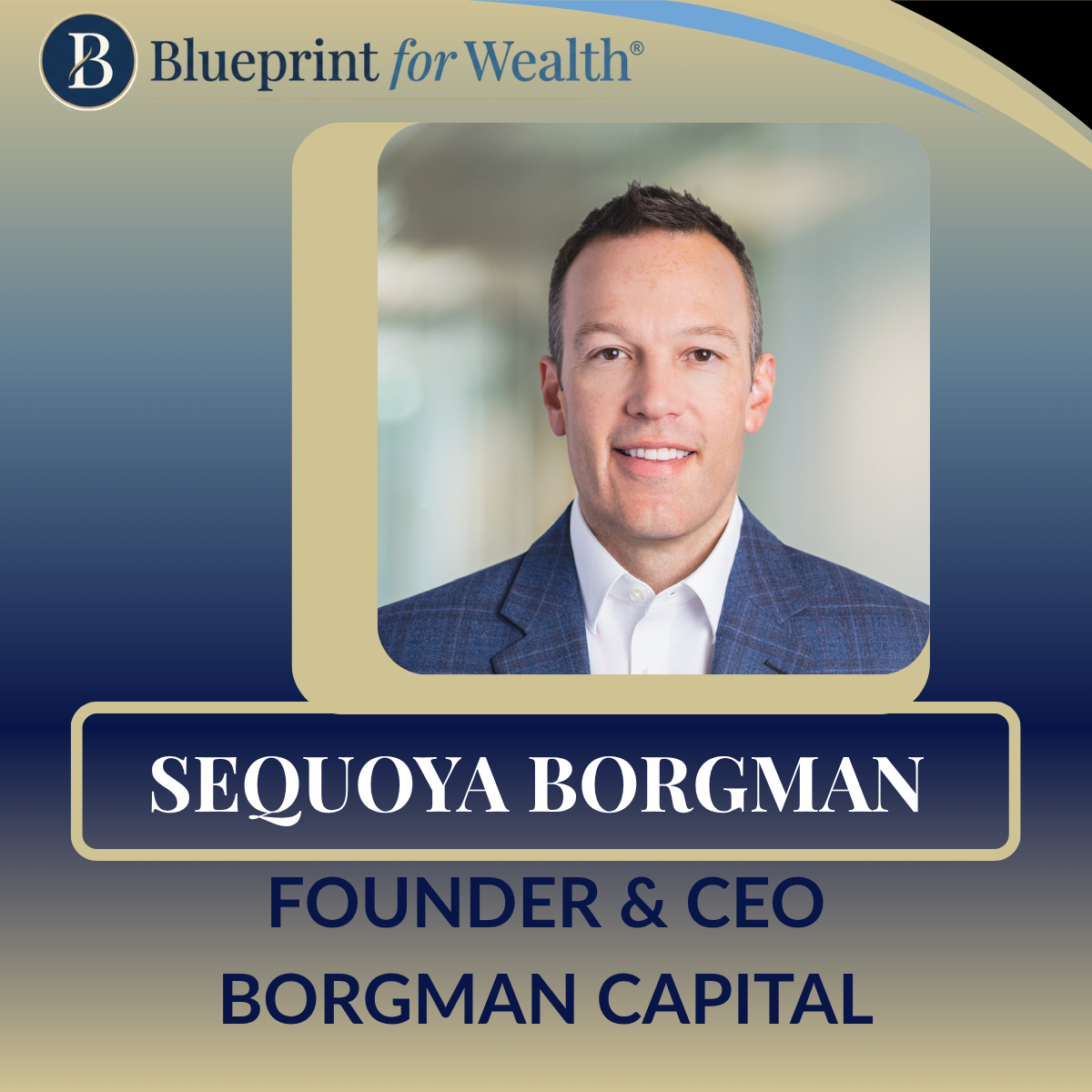
A private equity buyer’s view of what drives your value, how you get paid, and how to protect what you built.
Learning how to sell your business starts with a question beyond price: who is buying it, and what happens after the sale? Wayne Zell sits down with Sequoya Borgman, founder and chief executive officer of Borgman Capital, for a buyer’s view of the choices that shape an owner’s exit (Borgman Capital team).
ABOUT THE GUEST
Sequoya Borgman is the founder and chief executive officer of Borgman Capital, which he established in 2017 to invest in established, privately owned businesses (Borgman Capital team). Before launching the firm, he held leadership roles at RSM and KPMG and worked on planning, structuring, and reviewing business acquisitions (Borgman Capital team).
Learn more about Borgman Capital and connect with Sequoya on LinkedIn. His official biography provides additional career and education details.
Key Points
Buyer fit matters: Compare the buyer’s plans and the deal terms, not just the highest offer.
Owner dependence creates risk: A proven management team can give a buyer more confidence that the business will keep performing.
Purchase price is not all cash today: Understand payments made later and ownership you may keep after the sale.
Legacy needs clear terms: Raise employee and community priorities early, then work with your advisors to document the agreed commitments.
Preparation supports the process: Organize the information a buyer will need and discuss the founder’s transition before closing.
Timestamps
00:00 Why owner dependence can lower your offer
00:30 Meet Sequoya Borgman and understand private equity
02:06 What buyers want in a business
04:37 What drives your business valuation
08:49 Cash, debt, and ownership after the sale
13:18 Private equity myths and borrowing risk
16:23 The highest offer versus the right buyer
18:09 Protecting employees and your legacy
20:52 Due diligence and sale timelines
23:38 Planning your transition and finding a buyer
Quotes from the Episode
“Not every deal's perfect for every buyer.”
“I wish it was more of a science, but it is an art.”
“It takes a lot longer than most people think.”
“Once we trust each other, then that's when a good transition happens.”
Sequoya Borgman
“A handshake about your people is not a promise.”
Wayne Zell
Transcript
Private Equity Demystified
Sequoya Borgman with Wayne Zell
Blueprint for Wealth | Approved audio transcript | Runtime: 28:33
This transcript is lightly edited for readability, with punctuation and repeated fillers cleaned up. Timestamps mark the approximate start of each passage in the approved audio, including the opening preview.
[00:00] Sequoya Borgman
The biggest risk in a business is that transition from that owner-operator. And if that transition doesn't go well, or they're not able to bring on a new president to take on some of those key roles, that's a big risk for the buyers. So we would tend to pay a lower multiple for that type of business. Where if the individual has already stepped out of the business a little bit, hired a strong management team to take on some of those responsibilities, those companies tend to go for a higher multiple because it's less risk for that buyer.
[00:30] Wayne Zell
Welcome to Blueprint for Wealth. And today with me is my special guest, Sequoya Borgman. Let's start at the beginning. Private equity raises money from investors. Sequoya, first of all, where does your investor money come from?
[00:44] Sequoya Borgman
First of all, thanks for having me on the show. We can talk a little bit about our structure and how we raise money. There's thousands of private equity firms. I think everyone is a little different. We get lumped into kind of the same alternative investment pool, but everybody goes about it a little bit different way. And our investor pool is primarily family offices, ultra-high-net-worth individuals, all accredited investors, some smaller institutional investors. But we invest primarily in the lower middle market, so as you said, companies under $150 million or so in revenue, and really all over the country.
[01:23] Wayne Zell
Is there any particular industry that you guys focus on, or is it just anyone who needs private equity investment?
[01:31] Sequoya Borgman
No, we're kind of value investors, I'd say. So we tend to invest in family businesses. We've bought 22 businesses since we launched almost 10 years ago. And they tend to be closely held, older-industry type: industrial manufacturing, food businesses, distributors, some equipment rental businesses. Recently we bought two businesses really tied to infrastructure here in the country. And like I said, we've bought companies really all over the country at this point.
[02:06] Wayne Zell
Is it fair to say that buyers are constantly looking for steady or regular cash flow? They're looking for clean financial records. And they're looking for a team that can run the business without the founder. When a company crosses your desk with a potential investment or purchase, what are the first things that come to your mind when you're looking at their proposal, and what attracts you to them?
[02:32] Sequoya Borgman
Yeah, we're really focused on the cash flow of that business and kind of the seasonality, cyclicality in the business. We look at established businesses that have been around decades, that really have a proven business model that can maintain those ups and downs that come along with business. And that's because we're a traditional leveraged buyout shop. There's other firms that really focus on growth equity or more early venture-type investments, but we're traditional.
[03:03] Sequoya Borgman
We put leverage on every deal. And to buy businesses with outside debt, you really need a strong, steady, cash-flowing business. So that's the first thing we focus on when we see a new company. We look at how steady has their cash flow been, how have they managed down cycles in their industry or the overall economy, and what kind of cash flow can we rely on? And those are the businesses that we really focus on and go after.
[03:31] Wayne Zell
There's downsides to these. What makes you walk away from a potential investment? What are the deal killers that you see first and most often?
[03:42] Sequoya Borgman
Well, most things we can work through that pop up in diligence. It's really the people parts of the business. At the end of the day, these businesses that we're invested in, it's all about the people, and that's still a huge part of that value in that business. So if it's either a person that there's a risk that they're going to walk away, and maybe you'll lose some customers or lose some revenue related to that, or you just don't get the warm and fuzzies, or you don't really trust the seller.
[04:09] Sequoya Borgman
That's the number one reason. Or maybe we're not aligned. Maybe they want something else for the future of that business than what we need as investors. We look at about 1,500 businesses a year, and we buy three or four of them. So there's a lot of buyers out there, and there's a lot of sellers out there. Not every deal's perfect for every buyer, and we make sure that we're aligned with really what that founder or family wants to do with their legacy.
[04:39] Wayne Zell
Businesses can be valued in so many different ways. And in my experience, buyers usually price a business based on a multiple of EBITDA: earnings before interest, taxes, depreciation, amortization. And it's simply a rough measure of operating profit. So if your EBITDA is $2 million and the multiple that is given to the business in this particular case is five, then it's a $10 million starting point. How would you describe what moves a multiple up and down today in this environment, but in the past and going forward? What are the key factors that you use in valuing businesses?
[05:20] Sequoya Borgman
Yeah, the biggest risk in a business is that transition from that owner-operator, especially those smaller, couple-million-dollar EBITDA businesses. Those owners are really very involved in that business. And if that transition doesn't go well, or they're not able to bring on a new president to take on some of those key roles, that's a big risk for the buyers. So we would tend to pay a lower multiple for that type of business. Where if the individual has already stepped out of the business a little bit, hired a strong management team to take on some of those responsibilities, those companies tend to go for a higher multiple because, again, it's less risk for that buyer.
[05:59] Sequoya Borgman
And especially if those individuals have been there a few years. It's not like they're bringing them on right before they're getting them ready to sell. That's one of the biggest risks, is these individuals, these entrepreneurs, they've built something from nothing, but most of the time they are a big chunk of that business. And that's really a lot more value and a lot bigger impact on the multiple that you pay than people really think.
[06:25] Wayne Zell
Is the multiple also impacted by the size of the company and the revenues and the number of employees and how long they've been in business? How do you all come up with these multiples?
[06:37] Sequoya Borgman
Yeah, I wish it was more of a science, but it is an art. It is an art. It's supply and demand. It's really how in demand is that particular business, especially if it's an add-on or maybe a strategic buyer that can get some synergies out of that business, so they can pay a lot more than maybe a financial buyer like we are. But sometimes there's certain industries, right? Like right now, I mentioned kind of infrastructure-related businesses tend to be pretty hot. And then also the service businesses right now are going for higher multiples.
[07:05] Sequoya Borgman
And historically, I think people are trying to go after investments that may not be impacted as much by AI, and that's really why these service businesses are hot. But it goes in cycles. Then from my standpoint, that $2 million EBITDA business that you mentioned earlier, maybe one has a lot of capex that you're spending every year. One needs a lot more investment. One you have to put in a new ERP system. There's a lot of different factors that go into there.
[07:32] Sequoya Borgman
So you can't rely on that $2 million cash flow. Or maybe you need to hire a high-level president to run that. Those people, they expect a higher salary than potentially whoever was running the business. So there's a lot of different factors, and really, the smaller the business, the higher the risk in that business and the more work it's going to take. If you buy a business with $10 million of EBITDA, they probably have a pretty strong management team, and they're pretty strategic.
[08:03] Sequoya Borgman
You can help them with big-picture stuff, but they don't need you telling them about day-to-day operations. Where a $2 million EBITDA business, they may need help with really what's going on on a daily basis. And that's all built into that multiple that you're paying for that business. So a lot of different factors. Sometimes it's just timing. I feel like the market's down a little bit right now. Multiples are slightly down, and structure's definitely down because banks are lending less leverage on these businesses.
[08:35] Sequoya Borgman
So either you have to pay less for the business, or you've got to put more earnout or seller note or some kind of structure in there to get the same return. Our investors still want the same return that they were getting a couple of years ago. So you have to figure out how to get that through some type of structure.
[08:49] Wayne Zell
Right. That was my next question to you. I've rarely seen a deal where one check is handed over to the seller at closing, and that's the end of the deal. And that's cash at close, right? There's going to be a possibility of a seller note. So there might be some financing being provided. There might be an earnout where you get paid if you hit certain targets in the future.
[09:15] Wayne Zell
And there's usually some type of escrow, a holdback to protect the buyer from any kind of breach of promises, reps and warranties that are in the purchase agreement. What does a typical structure look like for you, or does it just vary deal by deal?
[09:30] Sequoya Borgman
Really does vary deal by deal. But I'd say the typical structure for us, say if we were paying seven times for a business, we would put maybe two, two and a half times senior leverage from a bank on there, and then maybe one turn of either subordinate debt or some kind of mezzanine debt, or maybe a seller note. All of that helps with our IRR on our equity that we put in there. And then we're majority investors, so we'll put the equity in. And then if there's a lot of risk still around that seller, we'll have them either roll over some equity or stay involved or give them an earnout so that their interests and our interests are aligned.
[10:14] Sequoya Borgman
All of those. But the less equity, of course, you put in a leveraged deal, the higher the return for us and the investors, so that's always a factor. Where if you just paid all cash and all equity for one of these companies, you might as well put your money in some CDs or some other type of less risky type of investment.
[10:36] Wayne Zell
How much do you typically buy when you're buying a majority interest? Is there a range of percentage of ownership that you acquire and then require the seller to have rollover equity of a certain amount?
[10:49] Sequoya Borgman
I wouldn't say it's typical. We're always majority, so we're always buying control. And I'd say probably 80% of the time the owners will roll over about 20%, but they can roll over more, they can roll over less. And we've bought plenty of businesses where we've bought 100% and the owners really rolled over nothing at close. So it really kind of depends on what they want to do. And as long as we can project kind of the returns that we need, we'll work around that.
[11:18] Sequoya Borgman
But of course, if they're walking away with 100% of the equity, we're probably paying a lower multiple for that business, and we're taking on more risk. So that's kind of built into the price that we're paying. And same with the earnouts. If they aren't willing to get an earnout, say a lot of these, as you know, you sell businesses, a lot of projections are hockey sticks. And if they're not willing to stand behind those numbers that they're showing us, then that's very telling. And of course, it goes into our valuation and what we are willing to pay for that business.
[11:55] Wayne Zell
Sure. And the question always comes up: most of the sellers that I'm working with on smaller deals, not $10 million to $100 million, are unaware that these deals are financed by banks, mezzanine investors, lenders. And today, what would you say the percentage of the deal is equity, cash going in, versus debt? In your experience, what are you seeing today?
[12:27] Sequoya Borgman
Again, it depends on the business, how much debt that business can take on, and the multiple you're paying. But some of them are 50-50. If you're paying six or seven or eight times for the business, sometimes you're putting in a lot more equity if you're paying a lower multiple. So you're paying four or five times for that business. Maybe it can only take one and a half or two times from a bank. And the banks don't really like financing the small stuff.
[12:53] Sequoya Borgman
It's a lot harder. Under the size we're doing, there's a lot of SBA lending and deals getting done with that type. But we really can't compete with that on the leverage that we're putting on these businesses. So I'd say the smaller ones, less leverage, banks like them less, so more equity. The larger ones, the banks like them, and you can put a little bit more leverage on those types of businesses.
[13:18] Wayne Zell
If you had to say, what is the biggest myth that you've heard about private equity? Private equity has a reputation: load the company up with debt, cut the staff, flip it. Some firms have earned that reputation. Many haven't. And what's the myth that you're tired of, number one? And how should an owner tell the difference between the private equity firms that they're talking to, even with an investment banker that they're working with?
[13:46] Wayne Zell
How would they distinguish you from others, and why would they want Sequoya to come in and be the investor?
[13:55] Sequoya Borgman
I think some of that bad reputation is really from the '80s and '90s, when there was all those really struggling businesses that were getting bought and either broken up, and they were cutting costs and trying to make some money. And back then you could put 90% leverage on a business. That's Michael Milken days. And there was a lot of deals that didn't go very well. The ones that went well, people made 10 or 20 times their money.
[14:20] Sequoya Borgman
The ones that didn't go well, they lost their money. But it impacted people and their livelihood and their jobs. A lot of people lost their jobs. But that's 40 years ago now, or longer, that a lot of that stuff happened. I know a lot of other private equity firms. I don't know any firm that doesn't want that company to be more successful after they buy it than before they bought it. And all these businesses are about people. So even though that's kind of the reputation, and sure, there are some turnaround shops and people that buy stuff out of bankruptcies or bad situations, and they've got to make some tough decisions for the health of that business.
[14:57] Sequoya Borgman
But the majority of private equity firms out there buying nice, healthy businesses, they want those businesses to grow and be more successful than they have in the past. And you don't do that by cutting costs or cutting people. You do that by really adding, growing. And sure, it is leveraged. So the bank gets paid first. If that business doesn't do well, the bank steps in, and they do whatever they need to get their loans back.
[15:27] Sequoya Borgman
So some of those situations do happen, and that happens with private equity companies and non-private equity companies. So there's always some part of the market that's not doing well. And sometimes timing isn't great because, say you buy a business, the first year or two till that leverage gets paid down, that's a big risk on that business. Say there's a turn in the economy, that whole sector could get hit. And then sellers have to take some responsibility too.
[15:54] Sequoya Borgman
Like if they sell a business for more than it's really worth, that is a huge risk to all their employees, to what they've built, if somebody overpays for that business and can't afford the debt that they put on to buy that business. There's risk on both sides, but the sellers have to take some, because we've sold businesses, and yeah, sometimes you get 30 or 40 offers, and of course you want to take the highest offer. But is that what's best for that business? There's always a lot of outliers.
[16:23] Wayne Zell
Describe a situation where a client should take a lower offer, but it's better for the business.
[16:31] Sequoya Borgman
Auction process, you kind of let the market speak. So you can't really say your business is worth more if the market says it's worth X. You can't say it's worth Y. There are plenty of business owners out there that have unrealistic expectations. We cross that bridge all the time. Most of those businesses just don't sell. Or they wait a couple years, and they figure out that, yeah, really that's what the business is worth. But really the only times you would want to take less than the highest offer is either just your interests aren't aligned.
[17:02] Sequoya Borgman
You do care about your legacy. A lot of this is a very emotional process for a seller. And if there's somebody that's really paying more, they're going to have to get the same type of return. So then that return, either they're going to put a lot of pressure on that management team, or they're going to have to cut some costs out of that business in order to get that same return that we want.
[17:25] Wayne Zell
What is the return that you all are looking for on an investment?
[17:28] Sequoya Borgman
Lower middle market is a little bit higher risk than middle market. So we're always looking for a 20-plus-percent IRR on that investment. But I've never seen one investment thesis where you hit what you're projecting going into it. It's hard to project a budget and forecast one year out, let alone five or 10 years out. But that's what we model out. We talked a little bit, I'm a former CPA, numbers guy, and we've got a lot of finance guys on the team.
[17:59] Sequoya Borgman
So we definitely model out something in the 20-plus-percent IRR in order for us to go after and take on that risk, and especially the smaller companies.
[18:11] Wayne Zell
So the next question I get a lot of is, are my employees going to be okay? Are my customers going to be okay? Is my name still going to be on the building? Stuff like that. And here's where I'll play lawyer for a second, because I am a lawyer, and I've done a lot of these deals. A handshake about your people is not a promise. And I know that you said people is really an important consideration for you all when you're buying a company. If that legacy matters to you, it belongs in the documents, right?
[18:40] Wayne Zell
So how do you handle culture? How do you handle management, the founder's name, et cetera, in anticipation of the closing and then after the closing? What are you all able to reduce to writing or promise in terms of the employees? How do you guys handle that?
[19:00] Sequoya Borgman
We've certainly bought businesses where we've had in the purchase agreement that we wouldn't lay off any employees for a certain period of time, that we'd give all the key employees management agreements. And every company we buy, we set aside a chunk of the equity for the management team as well. Anybody adding, creating value, they get equity. So we try and align their interests. We've had companies we bought where the seller really cares about the name of the business, and from my standpoint, I'm not a branding or marketing person.
[19:31] Sequoya Borgman
We're not going to go in there and change the name of the business. But again, I tell them most of the time, what are you going to do if you hit a downturn in this business? I know all these employees are family to you, but you still have to do what's best for that business at the end of the day. We would do the same thing. We want that business to thrive and be around for generations. And sometimes business is tough. You've got to make tough decisions, and we're going to do whatever we can to make sure that business thrives and is successful.
[20:01] Sequoya Borgman
The last thing we want to do is lose any key employees, lose any customers, lose any suppliers. Really, we want that business to be just as successful, if not more successful, than when they ran it. We bought a company nine years ago, and that business owner really cared about it. He was providing scholarships for all the seniors at the high school near where his company was. And we're still doing that nine years later.
[20:29] Sequoya Borgman
We have no obligation to do that. He just really cared about it. He supported a community, and that business is a big part of that community. And we still do those types of things. And if he wanted to write that in the contract, I'd be very supportive of those types of things. We want those companies to be pillars of their community and continue to support whatever created that business to make it do well. We want to continue that.
[20:53] Wayne Zell
The process of selling a business is a lot more complicated than most people realize. You start having conversations. Maybe you found somebody by reading or doing some research, or your analyst found somebody, or they contacted you. But you have conversations. You have an indication of interest maybe, or a letter of intent. The terms are not final. It's nonbinding, typically, except for a few provisions in it. And then due diligence, which is really the nuts and bolts of it, which most sellers who've never gone through this don't understand how complicated and how detailed the buyer needs to be when they're going through this process.
[21:32] Wayne Zell
And then the agreements start to come through. What is your experience in terms of the time that it takes to get a deal from the initial conversations to closing?
[21:44] Sequoya Borgman
It takes a lot longer than most people think. We've had ones that have taken years, and we've had ones that have taken 60 days. So it really depends on that business and how sophisticated their advisors are too. A lot of times, if they have a good advisor that can kind of give them good advice and help them through the process, those go quicker. The ones where they're trying to do it themselves, those tend to take a lot longer. The one thing I know is it's like a root canal. That due diligence is never not painful for those sellers. But they have to realize somebody's giving them life-changing wealth, and they need to be confident that those millions and millions and millions of dollars that they're getting, that that is a good investment for that buyer.
[22:30] Sequoya Borgman
So even though it's painful, a lot of these sellers in the lower middle market, they don't have great finance teams or internal people that they can rely on to help them through the diligence process. So they're doing a lot of the heavy lifting. And I know it's a lot of work, but it's just something you have to do if you want to walk away with a large check. It's just part of it.
[22:55] Wayne Zell
And the lawyers drive it. But your lawyers are trying to protect you and your investors. And if I'm on the sell side, I'm trying to protect my client. But usually it's the seller that gets very frustrated with the amount of questions and the amount of detail that they have to provide. They never realize that the buyer is buying the whole shebang. And so they want to make sure that all the contracts are there, and that they're signed, and that they say what you say they say, and that there are no quirks or gotchas in those contracts.
[23:29] Wayne Zell
So I think it's important for a seller to set their expectations that this is going to be a long, arduous process. And I think that you've sort of confirmed that. How does it usually go in your deals in terms of the founder's exit path? Are most of the founders that you're buying into ready to leave because they've assembled good teams, and that is one of the criteria that you all expect to see when you're buying a company? Or do you also expect the founder to stick around? I guess it depends on the deal.
[24:00] Sequoya Borgman
Yeah, I try and rely on that founder. I've found you can't really force a founder to do something that they don't want to do. That doesn't work very well. They're entrepreneurs. They're used to making the final decision. So I really have some good conversations with them and say, what does a perfect transition look like for you? How long do you want to stay around? What are your family's plans? When would you like to transition out? And we kind of agree to that smooth transition prior to closing.
[24:30] Sequoya Borgman
And we try and stick to that. Some founders want to stay around two or three more years. They're still young. They want to continue to run the business. And we've had founders that they enjoy it. They're all scared of private equity. And then once they see that we really are there to help them, and we really want that business to be successful, they'll stay longer because they're having fun, and they've got more upside in that business. And yeah, it's hard to get to know the buyer before a transaction, especially when there's a broker or investment banker involved. They try and keep a Chinese wall up there. But once that wall comes down and you're working together, some people work better together, others not so much.
[25:09] Sequoya Borgman
We've had people transition out early because of health reasons or other reasons. That is a big risk for us, investing in family businesses, so we just want to make sure that that goes as smooth as possible. And like I said, I've learned over the years, just rely on what the founder wants to do. And when the founders are running the businesses, these businesses tend to do very well. You always hear about that J-curve in private equity investments.
[25:36] Sequoya Borgman
That's when you bring in a new president, new management team, you make some investments, and your EBITDA tends to go down in that year. That doesn't happen when the founder's still running that business the year or two or three years after investing. You kind of avoid that J-curve dip from having them still run the business, because they ran it like they ran it before you bought the business.
[25:59] Wayne Zell
Do you find the businesses yourself, or does your company, do they basically bird-dog potential acquisition targets? Or is it a different approach in terms of how the deals come to you?
[26:13] Sequoya Borgman
Yeah, we try all the methods. We've got five offices around the country. We've got 15 people on the team. Everybody's looking to source deals through their network. We know all the brokers and investment bankers that send us deals in this size. We do outbound marketing and cold outreach, which doesn't work very well, but you still have to do it. And then our best opportunities come from somebody we know in one of the markets that we're located in that introduces us to a great founder, a great business that wants to sell, and we build a relationship with them over a longer period of time.
[26:52] Sequoya Borgman
And once we trust each other, then that's when a good transition happens. But we look at broker deals, investment bank deals, and really anything that might be a fit for our box.
[27:04] Wayne Zell
We've been talking with Sequoya Borgman at Borgman Capital. Where are your target markets? What are the general areas that you look for targets, sellers?
[27:14] Sequoya Borgman
Yeah, I like kind of secondary markets, smaller communities around the country. We're in Milwaukee and Minneapolis and Indianapolis. And then we've got somebody out on the West Coast and then somebody down in Florida. Those markets are great markets, but we've bought companies in towns as small as 350 people. It's just great. You get great employee bases, very loyal teams, low turnover, and that's where you find kind of a diamond in the rough.
[27:41] Sequoya Borgman
These really second-, third-generation businesses that have been around a long time, have a great product, great, strong customer base, and they're very consistent from a cash flow standpoint.
[27:53] Wayne Zell
Well, it's been a pleasure talking with you today. Again, it's a hot topic. Most of the money that I'm seeing going into these deals is coming from private equity. And you are one of the many sources that people can turn to for private equity capital investment, selling a majority stake in their business. I appreciate your being a guest on Blueprint for Wealth today.
[28:16] Sequoya Borgman
Yeah, thanks for having me on the show.
[28:18] Wayne Zell
All right. And we'll provide the information on how to get in touch with Sequoya in the show notes. And stay tuned for another episode of Blueprint for Wealth for entrepreneurs who are thinking of exiting their business in the future. Have a great day.


