
Build a Business That Can Run Without You | Ed Offterdinger on the Leadership Gap That Costs You at Closing
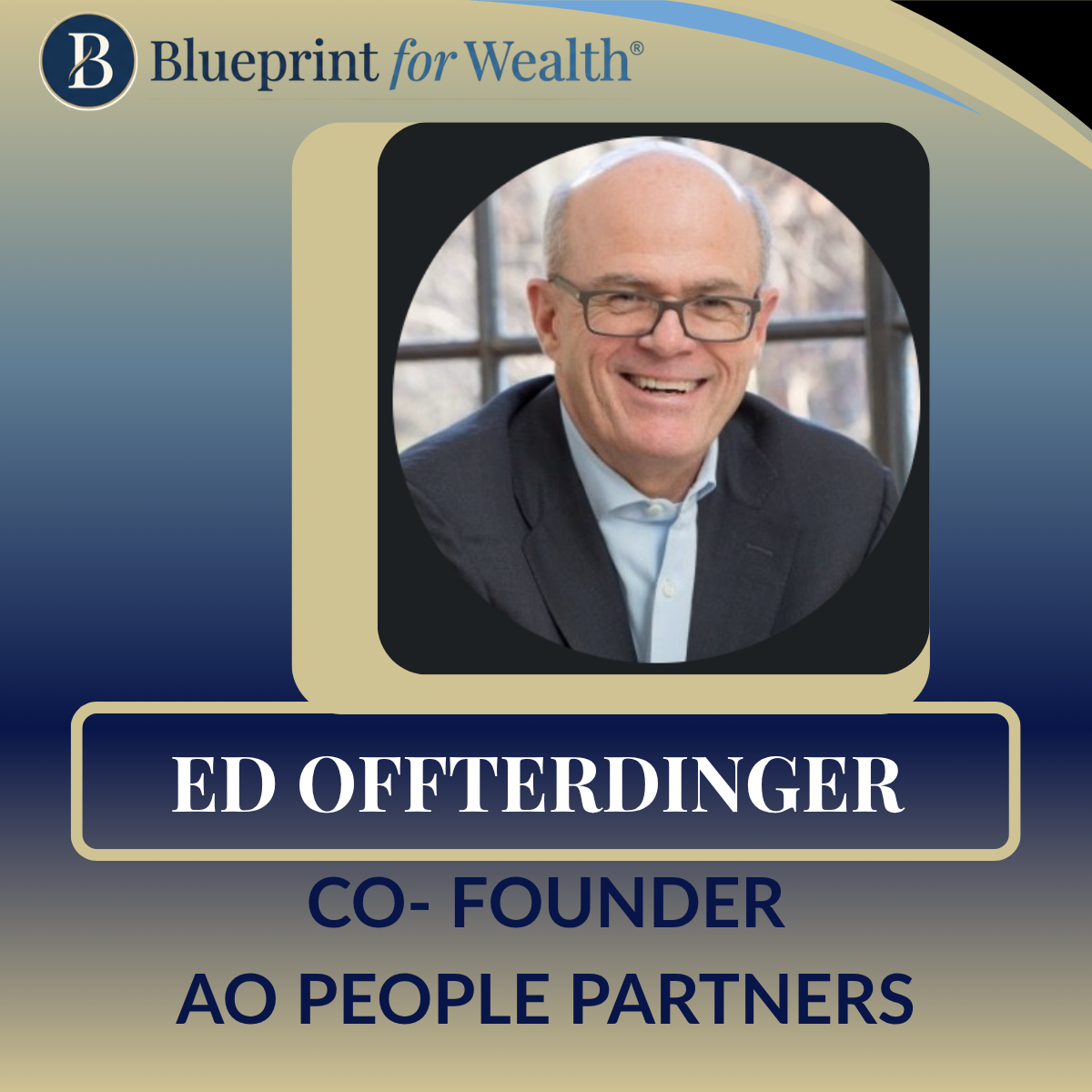
Ed Offterdinger spent almost a decade at Arthur Andersen, then led Beers + Cutler as CEO and managing partner through the 2009 merger that created Baker Tilly, now the fifth largest accounting and advisory firm in the country. Today he is co-founder and chairman of AO People Partners, where he coaches chief executives and leadership teams. He is also co-author of "Conscious, Capable, and Ready to Contribute."
ABOUT THE GUEST
AO People Partners: aopeoplepartners.com
Ed's background, from Beers + Cutler through Baker Tilly, is on his LinkedIn profile
Book: "Conscious, Capable, and Ready to Contribute," co-authored with Catherine Allen, published by Conscious Capitalism Press and available on Amazon
Ed's coaching training: Georgetown University leadership coaching program
The 2009 merger of Beers + Cutler and Baker Tilly Virchow Krause
AO's strategic partnership with K&A, the executive search firm Ed references in the episode
AO's team: Catherine Allen, Rob Williams, and Amanda Karst, plus roughly a dozen coaches on the roster
Key Points
A buyer asks about your leadership team early, and "sales, operations, and me" is an answer that lowers your price.
Closing a leadership gap takes about three years: one cycle to see it, one or two hires to fill it, another cycle to prove the hire works.
The seat most often empty is a chief financial officer who has been through a sale, rather than a strong controller who has not.
Replacing an employee costs 100% to 200% of a year of their pay, which is what makes a development budget pay for itself.
Private equity buyers tend to invest in leadership teams rather than clear them out, because the next buyer wants a team already in place.
Timestamps
00:00 The question that sets your price
00:25 Meet Ed Offterdinger, from Arthur Andersen to Baker Tilly
05:32 Why he trained as a coach at Georgetown
07:31 Inside the book: Conscious, Capable, and Ready to Contribute
11:32 Growth mindset and the one interview question
14:16 Conscious capitalism, and why it pays
18:00 Culture when private equity is the buyer
22:41 The value gap and the missing CFO
27:16 When to hire a CFO, and why it hurts
32:05 Life after the sale, and your successor
36:41 Own, Model, and Drive
Quotes from Ed
"If you're thinking about a transaction in three years, then I would say you need to get started now."
"If you can find a business-oriented people leader, that is money."
"Conscious means intentional. If you're just hoping they're gonna be ready, that's gonna be bad."
"There is life after sale."
"It's not conscious socialism. It's conscious capitalism."
— Ed Offterdinger
Transcript
Wayne Zell 0:00
The gaps, I find that, that's probably the biggest gap for the sellers that I that I deal with. When they come up to, you know, to start talking with private equity firms or potential buyers or investment bankers, they'll ask the same question. Tell me about your team. Well, I've got a person that runs sales, and I've got a person that runs operations, and
Ed Offterdinger 0:23
me. Right.
Wayne Zell 0:25
And we are the team. Welcome to Blueprint This for is Wayne Zell and welcome to this very half, very fast paced half hour of talking with entrepreneurs and people who work with entrepreneurs about how they built their business and how they can help you build your business. And today with me is my special guest, very special guest, Ed Offterdinger, who is he's been in my career my whole career, you know, and it's it's kind of odd, but we only became closer over the last couple of years. Ed, welcome to the show, and thanks for being a special guest. Ed has really migrated into being a a coach, an executive recruiter, a leadership coach, a strategic adviser, and he's an author.
And, he really is passionate about helping CEOs and executives and leadership teams shift their mindsets so that their practices and and whatever they're doing is best for the people and not just focused on profit. And so I think that's kinda cool. And then he and his partner, Catherine Allen, wrote a book called Conscious, Capable, and Ready to Contribute, and it's a really good book. I just started dig digging into it, and I've gotten through about a quarter of it. And it's a very fast read, but it's all about a story.
And it's, you know, it's obviously hypothetical and may have some basis in truth. But I think, you know, you should Ed, you should tell us a little bit about how you got from Anderson to where you are today.
Ed Offterdinger 2:03
Yeah. I think the place yeah. I was Arthur Anderson for almost a decade. Thought I would stay there forever. Then I got kinda sick and tired of being sick and tired and was gonna go work at a client.
And then I met Jim Beers, and I ended up in Beers & Cutler, which was a small firm and focused on real estate and focused on entrepreneurial people. And, you know, I had been an auditor, and, you know, I found out that the tax guys and the consultants were the ones that everybody liked, and the auditors were sort of a necessary evil. So I kind of migrated over there. I was at the right place at the right time, and when Jim, who had been the founder of the firm, you know, started talking about succession planning, you know, I was at the right place, right time, and so I became managing partner 01/01/2000. For a while though, they called me the Y2K problem, but things worked out.
Yeah, it was a bit of a joke. But along the way, there's been sort of two constants in my life. One is my wife, Donna, who, you know, actually went to high school with Wayne which is funny and the other through my professional career was a guy named Dave McGuire and Dave became really an executive coach to me and the other partners in the nineties and stayed with me as I moved up in leadership. I was managing partner, CEO of Beers and Color for almost ten years until we merged to create, really, to create Baker Tilly, which is now the fifth largest firm in the in the country. They've exceeded the expectations that Tim Christian and I thought of in 2009, but but but Dave was with me all along and so, you know, I knew it became clear to me that I wanted to keep working but I wanted to do it.
Well, put it this way. I say this a lot. What happened is that after a while, when you have a fair amount of success as an organization, and you're leading it, you look back and you realize it's been a long time since you had a one on one conversation with a client. You're, it's all about management. So, for me, I missed that and there was Dave in my mind and I thought, wow, I think there's a way for me to continue to give back and to make a business out of it.
So, ten years ago, Catherine and I started AO People Partners and we're focused on coaching the C suite. Initially, it was coaching CEOs who wanted to grow, figure out the rest of their lives, expand the business, and then it's really expanded into you know, we work with, you know, successors that have been identified. We end up working with entire c suites. Really, we're trying to move towards the goal. We do strategic planning, and we have association with a high end search firm because one of the things we notice is that you can we wanna invest in lots of development, but sometimes the person that you need is not working there, and you gotta go find them.
So our part of our solution is to to bring in the search firm. But at the end of the day, I was missing, you know, the kinda eyeball to eyeball direct assistance. And I've been on the market a long time, so I knew I could get business, and I I just knew a lot of, you know, a lot of CEOs and a few people, you know, put their faith in me and hired me as their executive coach right out of the box ten years ago and still plugging along, mostly doing the one on one work.
Wayne Zell 5:32
Did you go through any kind of training to become an executive coach? I saw you went to Georgetown for their leadership I
Ed Offterdinger 5:39
did, and that allows me to tell a little bit about Catherine, because I knew Catherine was a coach,
Wayne Zell 5:49
and This is Catherine Allen, your partner.
Ed Offterdinger 5:51
Catherine Allen, who's the A of AO, that's right, as you know, and Catherine is married to a long time friend of my wife. And so I knew I could get business, but I just said I need to know whether I should get some training here. Because, you know, I mean, I've been doing a lot of advising a long time, but is there actually a coaching thing that I should go learn? And so I thought, okay, well, I'm gonna go to somebody that will tell me the truth, and that's Catherine. So we I bought her lunch on Tysons.
I was still at the Baker Tilly. We're thinking about this and two things happened. It's like, yes, convinced me. So, I applied to Georgetown and I went through the leadership coaching program at Georgetown which was the first university that had done it. It's been twenty six years now.
There's thousands of Georgetown mentored coaches. It's a phenomenal program. It really helped me. The other thing that happened is over that lunch, we were like completing each other's sentences about what we thought about development of people and how that really was the thing that drove the most value. And I mean, I'm a capitalist, so, yeah, I love people, and I knew that it was good for the people, but I also know, you know, I I know it's good for business, and Catherine had this vision that it's ultimately the, you know, maybe it's the highest form of contribution that we can we can do if we if we develop people, they become better employees, of course, and then they leave, they start businesses, and they're better citizens and all these things.
And, you know, what came out of that lunch is that the early, blueprint for AO, which is pretty
Wayne Zell 7:31
So so you created this company, but you also wrote this book, Conscious, Capable, and Ready to Contribute, which, again, is an excellent book. I highly recommend it. It's available on Amazon, and it should be available on their website soon as well. Right. Right.
But tell us a little bit about the book and how that came to be because it's a really it really tells a story as opposed to, you know, just giving you advice like a lot of these, books will do.
Ed Offterdinger 7:58
The premise is that there was a company, Shift Advisors, a consulting firm, which is pretty typical to the DC space. And by any measure, you know, they're they're doing great. The numbers are fine, but but there's starting to be some cracks. There's starting to be some competition, and people start jumping ship. And a lot of it has to do with they lost their way a little bit as to, like, they had the right values at the beginning, they had the right basic plan for the people, but then they got a little full of themselves.
You know, the senior people weren't paying attention to their clients and so forth. And, you know, through the course of the story, Andrew is the principal and Pat, who is his partner, primarily Andrew, you know, I'll I'll stop and tell you one funny thing. So when I wrote the first draft, the editor that Conscious Capitalism had given me said, you know, no great story starts off with things were pretty good and then got real good. You need to torture this guy. Which I did.
As you'll see both personally, he went through a lot of things personally, which you'll get to if you have it.
Wayne Zell 9:09
I saw I saw that. I saw I the the the initial conversation that he has with this guy, Leo or somebody. Yeah.
Ed Offterdinger 9:17
Leo. Exactly.
Wayne Zell 9:18
Oh my gosh. It's like slap in the face.
Ed Offterdinger 9:21
So a few things are drawn from look. I mean, when you're when, you know, when you're in a people business a long time like I had been, you know, there's a place where a bunch of people leave. Okay? And they think they're gonna take all the clients. Well, I've been through that.
You know? Thank God for good contracts and good lawyers, you know, but there's some of that, and then aggressive competition, and then I knew a lot about government contract law, so there's some things that happen that, so I was able to bring in some fun things. And in the end, what happens, and this is really the reason we wrote it, is that they discover that really building a development culture, a conscious development culture, where that is like baked into their mission to develop their people in a very holistic way, technical skills, what we call mind skills and people skills. So, we kind of took people skills and soft skills and broke them into kind of the processing side of things, sort of, you know, executive functioning and critical thinking and then the other side of being people skills. So, listening and you know, EQ and those types of things and so, Andrew and the team discover this with the help of an HR person and whatnot and that gets rolled out through the course of it while this rollicking torturous story is going on.
And then Catherine in the back wrote, you know, 35 pages or so, like, okay. This is, like, these are the lessons. This is the how to. And that's a lot of what the anchor behind behind the way we do our work as we
Wayne Zell 10:59
Well, if anyone buys this book because of this recommendation, I I strongly recommend it. Read the story first because going straight to the how to is usually an entrepreneur's way of doing things. Yeah. There are a lot of entrepreneurs, you know, that will be listening to this interview, and I just encourage you to read the read the story because it really it may not resonate completely with you Right. But it'll definitely tell a story to you about some very important, mindset things that you've gotta remember.
Ed Offterdinger 11:32
Yeah. And and by the way, it's funny you say mindset because growth mindset is actually one of those those core things that we try to help leaders realize. You know? There's fixed mindset growth mindset. Carol Dweck wrote an amazing book.
Wayne Zell 11:45
I've read it twice. You know? Let me ask you about that. Growth mindset. Right?
Ed Offterdinger 11:49
Yeah.
Wayne Zell 11:50
How do you test for that? How do you find somebody who really does have a growth mindset instead of what we refer to as a fixed mindset?
Ed Offterdinger 11:57
Yeah. Well, I think I think the way I would what I observe so that's the other thing. I mean, as a coach, one of the things which is great, unlike today, it's like 90% listen and 10% talk. So you have to be curious. You ask a lot of questions.
So what you find is people who are unwilling to try things because they only want to be doing things that they know they can succeed at, that's fixed mindset. And what I noticed about people that they it is the process. You know, it is they, the joy of playing guitar, not the joy of getting on stage. You know, maybe they will someday but it's learning new things. I tell you, for years, this this for years, probably have figured it out one day because my coach had told me he had interviewed 9,000 people because he had also been the head of HR at Continental Bank and then did an outplacement business.
So I figured out one time, I think it's like 4,000 or more people I've interviewed. And and I, for the last twenty years, I've asked the same closing question. Slightly different now. But I asked this question. What do you read?
Or how do you get your information? I don't actually care what the answer is. What I want to know is, do you just read, like, the technical stuff from your work? Okay. But I'm interested in people that are like, gotta wanna learn about a worldview, curious, might read fiction, might write fiction, you know.
Again, it's just one question that I ask and it's not gonna be people, people will still get hired. But that tells me a lot about whether they have growth mindset based on how they approach the world. And are they,
Wayne Zell 13:55
they curious?
Ed Offterdinger 13:56
Are they curious? Which is just such a, we use the leadership circle as our assessment tool. It's phenomenal. And one of the characteristics of creative leaders is that they are personal learners. And to me, that's just code for curious.
Wayne Zell 14:16
Yeah. That's really Yeah. That's amazing. And I'd I'd like to know more about conscious capitalism. What is what is that organization all about?
Ed Offterdinger 14:25
Yeah. So I love it. It it start It was started by two guys, John Mackie, who is the founder of Whole Foods, and Raj Sisodia, who is a professor. He's actually a George Mason at one point. Bentley, I think.
Really, really amazing. So you've got a a very people oriented CEO coupled with a real academic. Conscious capitalism is really, you know, maybe post Amazon, but certainly pre Amazon was really the way Whole Foods was created. And there are basically four principles. One is higher purpose.
Look, Jim Collins, you know, so you don't have to be trying to solve the world's problems, but anybody knows if you're running a great company, there is there is something that's driving that organization forward, a BHAG maybe, some vision. So, but a higher purpose of some sort. So, that's kind of table stakes. Then, the one that is probably the one that makes the most difference is this idea of a really ice of of a all stakeholder orientation. So there's no trade offs.
John will say there's no trade offs in that kind of organization. You have to build a company that keeps an eye on the customer, obviously, but not at the cost of the the employees. But you can't just make it just pure employees and lose sight of the customer. Oh, and by the way, you have to pay your taxes. And they're oh, and you've got investors.
And so they create you know, these types of companies create these inter integrated stakeholder maps, built off their strategy where they have a plan essentially that addresses all those stakeholders. But a clear part of it is the people side, and that comes out in number three and number four, which is conscious leaders and conscious culture.
Wayne Zell 16:28
What does that mean?
Ed Offterdinger 16:29
Yeah, conscious culture, the short word, the the shortest way to say conscious culture is best place to work, committed to people, committed to learning and development. They are the types of companies like Marriott. They've been amazing for years in that. Hilton is high on the list of companies like that. You know, FedEx was for many many years.
Accenture, a lot of times for big, tough. So, you know, they're not all, you know, not all 100% perfect but these are companies that if you were to go like look at the, you know, the fortune 100 best places to work, you'd also see that they're like stock performance and whatnot has been pretty high over a long period of time. So, there's a book. It's a yellow book, Conscious Capitalism which was written by John and and Raj and in the back is an appendix that I go still go to all the time which really studies how the the companies they define as conscious companies. Mhmm.
Against the s s and p and other indices over like ten or fifteen years. They crush them. Because at the end of the day, it's not conscious socialism. It's conscious capitalism. And so these types of companies, they just, over the long haul, they outperform.
They just really do. So how do
Wayne Zell 17:49
they I mean, how do you become a conscious capitalist in today's world without being a a greedy capitalist, if you will?
Ed Offterdinger 18:00
I think it's I think it's harder, but not if you are yeah. This kinda gets into what you do, I think, indirectly. So It's it's you've gotta have a you've gotta be playing the long game. That's the that's the it's really hard to be fully conscious capital as a company if you are publicly traded for one thing, but more more relevant to what we're what we do, what we're talking about, if you are, you know, pointed towards, I've got to sell the private equity or that type of investor in the near term because it's pretty doggone hard. And yet, what I would observe is this, that if you think about what a buyer is actually buying, They're buying.
One of the things they're buying is a phenomenal leadership team and workforce and if turnover, you know, Sherm says that the cost of turnover ranges between 100% fully loaded and 200% fully loaded of a one year comp. Wow. So, think about that. You just drive down one or two points on turnover and it's amazing the profitability. Not to mention the customer service is better because they're not new people and all that kind of stuff.
So, I still think it works even in the private equity world. It's why AO gets hired frequently by private equity firms to coach the CEOs because they know what we're about, and then they're still buying in, and they know that the next buyer wants to buy, you know, a fully formed leadership team. And things can get a little dicey when the numbers start going off, but, you know, but that's
Wayne Zell 19:47
No. No kidding. Mean, we're we're all working with private equity buyers daily, and you are I am. One of the one of the reluctance or the the pieces that I, you know, I get from some of these sellers that I work with is, are they just gonna fire everybody and bring in their own people? And, how do you prepare an entrepreneur for the transition that's going to occur?
But also, how do you build their management team so that the entrepreneur can exit gracefully, or stay depending on what their goals and objectives are and build the team around them so that not everybody's just looking at revenue, profit. They're also looking at the stakeholders, the employees, the customers, everyone around them. How do how do you build that type of a of a culture and and an environment in a company that may not be used to it? A lot of these entrepreneurs have been running everything by themselves for years.
Ed Offterdinger 20:52
That is. Yeah. As you know, that is that
Wayne Zell 20:54
is That's pretty common.
Ed Offterdinger 20:55
That is a challenge. Very common. Well, one thing I would say, most of the people that hire us are multiple years away from a transaction, which is great, if if any transaction. And so they have the time to play a little bit of a longer game. And, you know, we do some things just with the CEO and just with the leaders on their own development and so forth.
But along the way and pretty early on, we'll start talking, digging in. I can't help myself, given my background, into the strategy. And so what I would say is that, you know, for me, and there are multiple ways to think about strategy, but I'm a big fan of the choice cascade, which is came, you know, winning playing to win by Laffley and Roger Martin. And this is just this idea that you have your goals and aspirations, where are you gonna play, so that's where you figure out, you know, service lines, geographies, how how are you gonna win? What's your value proposition?
And then the fourth one, which gets to the point you're asking is, like, and what are the assets and capabilities you need to execute those first thing? So we go through that over a period of time. And the fifth one is, you know, how to keep track of everything, which is semi interesting but necessary. It's what I would say is, like, then, when you really get into a company and we get embedded, you you start to understand where they're trying to go, and it may be they just and I see this a lot. It's one of the questions that we thought might come up.
It's like, you know, where's the where's the the thing that is the the, like, the the most missing piece among the leadership?
Wayne Zell 22:41
The value gap.
Ed Offterdinger 22:42
Yeah. Frequently frequently, it is it is they don't actually have a CFO who can get them to a transaction point to that. They just don't have the experience or worse yet, you know, the the founder has been driving hard, so he's been kinda cheap or she's been kinda cheap. So they may have just a nice, strong director of accounting or control. And when you get into thinking about rapid growth and or transaction, it's really helpful to have, you know, somebody, a CFO who has been through a few things.
But anyway, it comes down to gap analysis is where I would say, and that comes in through talking strategy. And because we end up oftentimes doing our coaching work with the whole team, both individually and as a team, you know, we I'm I'm fairly experienced in business, and I'm Catherine and my other two my other two partners as well as our team. So you start to work with a with a work with a client on the gap.
Wayne Zell 23:46
How long do you think it how long does it normally take to to identify the gap and then fill it competently?
Ed Offterdinger 23:57
Yeah. I think well
Wayne Zell 23:58
Are there a lot of starts and stops in along the way?
Ed Offterdinger 24:01
Yeah. I think the first part is, you know, I'm doing a circle because I I do think you need to sort of see one cycle around the whole you know? So I think within a year or so, we're at a point where we're now at the point where we're talking about, like, the team and the gaps. If if you if you're if you're lucky and you hire the right search firm and you ask the right questions and dig in, you may get what you need the first time. Sometimes it takes two tries, but then I think the same thing is true.
Once you've got the person, you really need another cycle. If you're thinking about yeah. Right. So if you're thinking about you wanna have a transaction, you know, in three years, then I would say you need to get started now. If not Three years
Wayne Zell 24:50
is a good benchmark, and it's not just about tax planning, and it's not just about estate planning and an exit planning per se.
Ed Offterdinger 24:57
It's important. It's important. But
Wayne Zell 24:59
It's all part of the process. But what you're doing is filling in filling the gaps, I find that that's probably the biggest gap for the sellers that I that I deal with. When they come up to, you know, to start talking with private equity firms or potential buyers or investment bankers, they'll ask the same question. Tell me about your team. Well, I've got a person that runs sales, and I've got a person that runs operations, and
Ed Offterdinger 25:26
me. Right.
Wayne Zell 25:28
And we are the team.
Ed Offterdinger 25:29
Which which just leads me to another really important point. I was so fortunate at Beers and Cutler. If you can find a business oriented people leader, that that is money. Because when I say people leader
Wayne Zell 25:49
Explain that. Yeah. Explain that.
Ed Offterdinger 25:50
Yeah. So no disrep I don't mean to be no dispersion towards HR, but HR is as frequently as functions and, you know, and all those things are important. You know, employee Benefits. Employee relations and all those types things. Hiring and getting all that right, which is super important.
But I'm adding on top of that and saying someone who really understands learning and development, who who believes that that's a wise investment, who can work with people like us to build programs that sort of sustainable. I mean, our our original, alma mater, not UVA, but, from a work standpoint, Anderson was amazing at this. Yes. They they just, you know, rest in peace. What a what a what a ridiculous thing happened to them over some really bad people in Houston, but what a great firm.
I mean, they just invested in those kind of development, and some of their HR people came right off the line, and they were they understood the business, and and and it was just really valuable. So when I you're right. We got somebody who runs admin. We got somebody who runs finance, and we got me. That's a very common so I would plug in oftentimes a better CFO and get you know, invest in not just HR generalists, but somebody that can really help drive that.
Wayne Zell 27:16
At what point does an entrepreneurial company that's, you know, trying to prepare itself for an exit, whether it's an internal exit or an external exit, at what point do they need a CFO, or can they rely on some type of, interim or temporary, fix to get them to where they wanna go? How do you feel about that?
Ed Offterdinger 27:34
Well, yeah, I bet you have an answer too. I don't think there's any one like, there's not one number, but but I would say, I again, I'll sort of think about, you know, think about beers and color and other clients I've seen. You know, you get to the point where you've got several 100 people and you are, you know, you're at a point where you might have $30 or $40 million in revenue, maybe a little less, but where where a acquirer is gonna start paying real attention. Yeah. I mean, I think it's in that range up until then.
It also just depends on what's the skill set of the you know, we were an accounting firm, so we probably didn't need a CFO as early as, you know, some what about you? I mean, you have a lot of experience. When do you when do you see people needing to make that move?
Wayne Zell 28:21
You know, it's the, it's the cheapness factor that drives a lot of the decision making. How much is it gonna cost me, and is it really gonna pay off in the long run? It's like hiring an investment banker, you know, to represent you in a sale transaction. Do I really need to pay an extra x dollars to the investment bank, or are they really gonna leverage up my my purchase price? I had a private equity firm just walk into me and offer me a $100,000,000.
I mean, shouldn't I just take it? And and it's an interesting, response that I give. It's like, well, it depends. I mean, could you get a 110, a 115, and does that extra dollar mean that much to you to That's to go through that process? And that's just one potential buyer, but there's a universe of people out there that might be interested in you.
Don't you wanna meet them? Don't you want the opportunity to talk to them and see how everybody is differentiated? So that's one factor. And then the other factor is they they have a timeline, and they wanna get out of the business in a certain period of time. Right.
And that's good. It's good to have a timeline on your exit. You should always have an exit plan that has a timeline on your exit. A lot of them just say, oh, five to ten years. And then they five to ten years later, they're still doing five to ten years.
But, I think it's good to have an exit time frame, but I also think it's good to have a plan to get to the exit and know how much you need and how much you want from the exit economically. So it is a capitalism, discussion. It's not socialism, and we wanna treat people well. We wanna keep our employees motivated. We want them to be learning, and we wanna replace ourselves, I think, is is is a good way of looking at it for, you know, for business succession.
But, they always don't think about that stuff. And how much is learning and development gonna cost me? I mean, that's where you come in and say, well, a good training program is really
Ed Offterdinger 30:20
That's where the turnover cost comes in. And, you know, we've got stats too because, you know, we can just show the again, that that they still they they still may be reluctant to invest because one of the lessons I learned and, you know, we've talked to my my son who's got his business and, know, you one of the things we I learned, early on is that you can you can have revenue. Revenue may be going like this, but, unfortunately, infrastructure goes in boxes. So so you add that CFO, and suddenly, you may look like you've just gone above the line on the revenue, but but that may be exactly what you have to do, what is what you have to do, but it can feel really painful because it is a slug of dough.
Wayne Zell 30:58
So I I
Ed Offterdinger 31:00
do that. Two things you said that something triggered two two thoughts. Yes. One is what I think of is like the the thing I like to do the most and what kinda got me into this in the first place and that's in in the context of this is there is life after sale. There is life after Baker Tilly.
There is life after and early on probably because I was younger then and you know, people were hiring me because it appeared that I figured that out. And I didn't I really figured it out, but I was figuring it out, and I did have a way of thinking about it because what I'm getting at is that I think that that the thing the one of the things the seller needs to be thinking about all along too is what's going to happen after because wow, that is so jarring for these guys and women because they have, this has been, this is.
Wayne Zell 32:03
It's their life. That's right.
Ed Offterdinger 32:05
They've been maybe on the building or maybe not but this is it and that actually takes a ton of thinking and planning. So, day one, with every CEO, whether they're thinking about selling or not, there's four things I have them do, and one of them is, and it's the fourth thing. Well, let me tell you what the third thing is. Two pages or less, I will not read the third page. Two pages or less, your story up until now.
And the hard part is to boil, you know, forty years of of work into two pages. So, you gotta be discerning. You gotta tell me what are the because like, what happened? Like, getting cut from the JV basketball team seemed to be something that really was fun guy. So, and then the but I pair that with one page at the top of the page, you write in the next ten years.
And I don't care what you put down, but just start putting down the things that you have been saying to yourself. Well, you know, when I get, I'm gonna I'm gonna travel. I'm gonna this. I'm gonna that.
Wayne Zell 33:04
Right.
Ed Offterdinger 33:05
Get them down and then, what we end up doing, Wayne, is we end up building a plan because most of these people are gonna, you know, we're living longer and longer. God willing, we don't get hit by a car but gosh, you know, they get a slug of dough. I got one guy. He got offered $150,000,000. I said, why don't you take it?
He goes, I would drink too much. He loves his work but so, I really think, that's where Catherine and I, Rob and Amanda, we take a pretty holistic approach to this. It's not just about performance coaching, but like planning for what's left, what's next. And that doesn't mean you're gonna start something, might be. You might go back to Georgetown coaching.
You might write a book. Might, who the heck knows? Maybe you wanted to get your handicap down. Maybe you wanted to be a sommelier. I don't know.
But I bet you have some idea, and I'll help you figure out how to do it. And that's what I do. It's really cool.
Wayne Zell 33:59
That sounds like fun.
Ed Offterdinger 34:00
It is. And I got people that are ten years into it that I'm still working with. So
Wayne Zell 34:03
Is that right?
Ed Offterdinger 34:04
Yeah.
Wayne Zell 34:05
So you are their executive coach today?
Ed Offterdinger 34:08
Still. Yep. Which is, you which is pretty cool, and I got a peep couple people that, you know, I'll stay like Dave, I'll stay with them forever if they want. The other thing that you, you know, we can come back if you want, but I think a challenge that many of your clients face and our clients face it as well is internal versus external successor, and this is something that they wrestle with. It could be a child, which brings in a whole other set of con.
And so, I mean, there are pros and cons to both, you know, if they're talented, but the internal advantages are obvious. You know, they're known, you you know their shortcomings, they know the culture. If you've done the right things, you've probably developed them well, pretty logical. Downside, they've never worked anywhere else. And so their vision may be very limited.
They may just try to run your play, which, again, if you sell a private equity, could be a complete disaster because they got all kinds of plans for you. Now, again, if you're thinking ten years ahead and you know that you're either a daughter or son or even a key employee, I mean, there's things like you know, Vistage or getting a coach or young YPO. Right. Or like I mentioned.
Wayne Zell 35:29
Organizations. There's.
Ed Offterdinger 35:31
CEO. Exactly.
Wayne Zell 35:32
Yeah, right.
Ed Offterdinger 35:33
In our our business, the accounting business, they're all, you know, all the managing partners of Baker Tilly network got together for years. So, you you have ways of learning that but again, conscious means intentional and so we would ask you, okay, well, are you doing to actually develop that person? Because if you're just hoping they're gonna be ready, that's gonna be bad. But, you know, the vast majority of times, if you could stay inside, great. Advantage to the outside, depends on, you know, what you wanna do, but they may have seen a lot.
They may have done a lot of acquisitions. They, you know, they may know lots of industries, and they may have run something that's the size you wanna get to.
Wayne Zell 36:13
So Well, plus, you've been in the industry for long enough that you know a lot of people in a lot of different disciplines that you can bring in to cauterize the bleeding or to help the growth and to seed it. And so I think
Ed Offterdinger 36:28
Help them sell like Wayne's sell.
Wayne Zell 36:30
Whatever. You know, that's not just what I do. That's not all I
Ed Offterdinger 36:33
do. Right? So I've read your book. I know that.
Wayne Zell 36:37
And you got a plan for what's
Ed Offterdinger 36:39
Speaking of
Wayne Zell 36:39
what's after.
Ed Offterdinger 36:40
Right? Great books.
Wayne Zell 36:41
Yeah. You gotta put thank you. So for AO, are you guys taking on new clients? Are you looking for new clients? And if you are, what types of clients are you looking for these days?
Ed Offterdinger 36:51
We, we are. Thank you. Yeah. A little bit. As I said, we have Catherine and I started it.
Rob Williams is a very experienced, came out of media based in the New York market. Amanda Karst is in DC. And then we have a dozen, about a dozen, coaches that are on our roster that have, you know, they don't just work for us, but they're very experienced, you know, mostly second chapter, third chapter types. So ideally, we are, upper middle market, middle market kind of companies. We have some smaller businesses, but people have some complex challenges.
You know, we do we one area of growth is private equity firms hiring us to work with either sponsor company or more likely to be the coach to the CEO that they have just acquired. Right. Just put in. I we get hired. I get hired a fair amount when the successor is identified and say, okay, we need you to come in and help so and so get ready, because she's the
Wayne Zell 37:59
The next in line.
Ed Offterdinger 38:01
Next in line. We do more and more of C suite and then the next level in larger organizations. So we have a program that's called Own, Model, and Drive.
Wayne Zell 38:14
I saw that on your website. Yeah.
Ed Offterdinger 38:16
Pretty simple concept, thankfully trademarked. Owning is this idea that we own our own development. That's where we do assessments and papers and getting in and you build your own Everybody who works with us builds their own development plan, the one big thing to drive it forward. What are your liabilities? What are you willing to try?
We coach them. That's the owning. The modeling then is once they get to a place where, you know, we're making some progress, then they have to take it out there and they have to model it for the organization. And let's face it, people
Wayne Zell 38:50
Not everybody's capable of doing that.
Ed Offterdinger 38:52
Correct. And so we help them figure out how to do that a lot of times on communication strategies and all kinds of things. And then the driving in is when you get farther in the organization and you start to think about cascading development, you know, sort of development light, if you will, but the same principles down deeper and deeper in the organization. And so we do teamwork, we, you know, we can facilitate retreats.
Wayne Zell 39:23
Team events, team Yep,
Ed Offterdinger 39:25
and then as I said, we also do strategic planning. It's
Wayne Zell 39:29
So if anyone wants to get in touch with you, how do they do that? What's the best way to reach you?
Ed Offterdinger 39:34
Probably the best is, can come right through the website, it's ao, one word, aopeoplepartners.com. We'll somehow put that in the notes or something.
Wayne Zell 39:46
Yeah, we'll have it on notes.
Ed Offterdinger 39:48
Wayne Zell 39:50
Excellent. Excellent. Well, Ed, you you've got a wealth of knowledge and I I'm I have so many more questions I wanted to ask you, but there's only so many minutes in our program. So, we went a little over today, but it was totally worth it. I'm really, really grateful for you.


