
USAID Contractor: Jacey Spratt: Resilient Leadership Adaptation and Growth in Professional Challenges
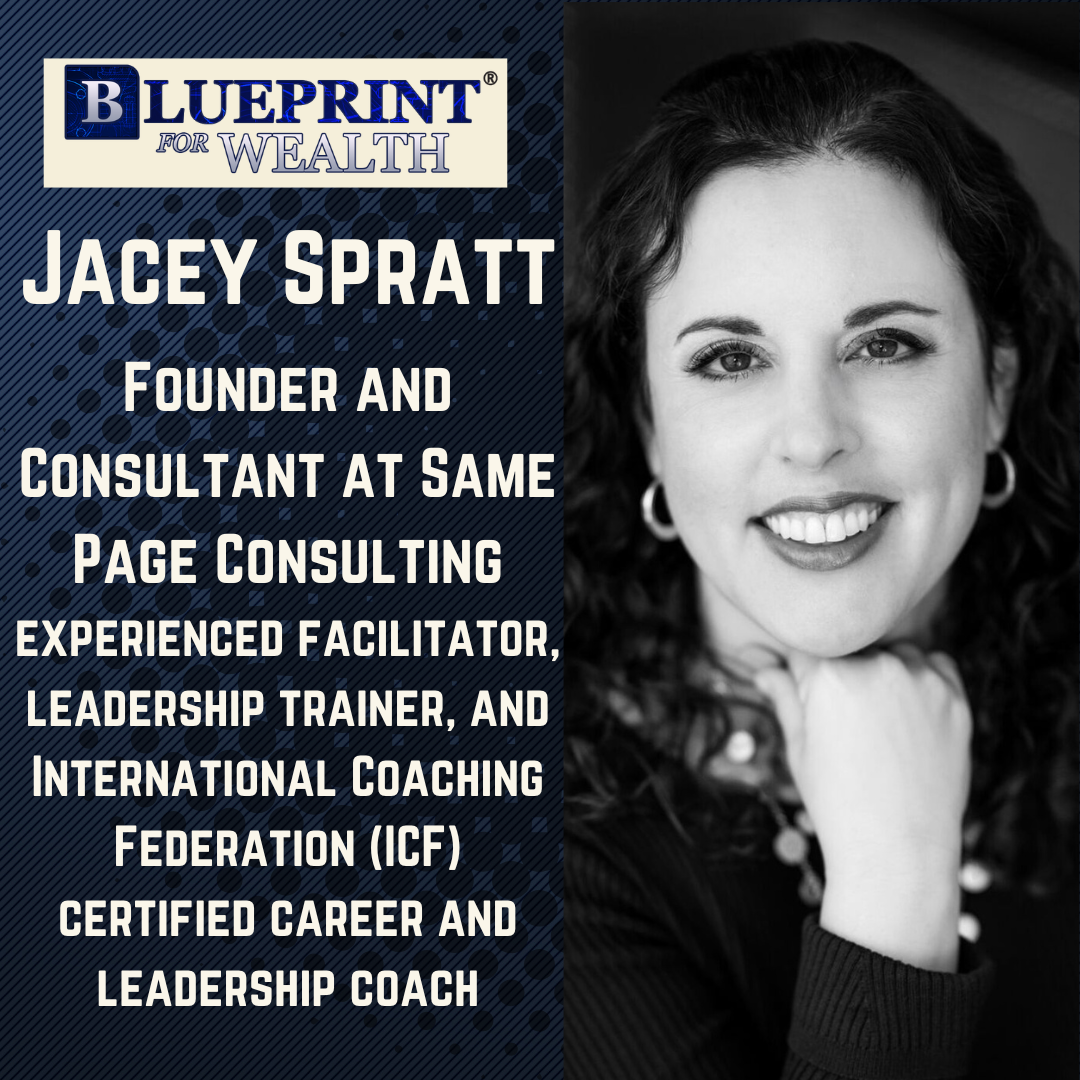
After thousands of USAID layoffs, Jacey Spratt lost her job. As a coach and leader, she discusses her USAID work, its criticisms, and how government changes affect staff. She outlines her adaptation, future plans, coaching, support initiatives, and resources, offering resilience and career strategies for USAID peers and broader audiences.
Key Points
Resilience and adaptability are crucial in navigating sudden professional disruptions, allowing individuals to pivot and find new opportunities despite initial setbacks.
Support networks and community efforts, such as coaching seminars and peer encouragement, significantly aid in overcoming job loss and career upheavals by providing a sense of agency and practical assistance.
Focusing on what one can control, taking small actionable steps, and maintaining physical and mental well-being are essential strategies for rebuilding and thriving after experiencing significant career challenges.
Timestamps
0:00 Introduction of the podcast and guest Jacey Spratt
0:31 Jacey Spratt’s background, expertise, and educational qualifications
2:03 Jacey’s professional journey, recent challenges, and USAID’s role
4:44 USAID’s work and addressing criticisms
7:51 Impact of government changes on professionals
10:21 Jacey’s adaptation and future plans
13:11 Jacey’s coaching, support initiatives, and resources
18:31 Strategies for resilience and professional adaptation
24:33 Jacey’s advice and the broader applicability of his coaching skills
27:11 Contacting Jacey and Wayne's closing remarks
Quotes
"People in the sector don't fall into the work, they're called to it."
- Jacey Spratt
"Focus on what you personally can control, taking small action steps."
- Jacey Spratt
"I don't want to survive, I want to thrive."
- Jacey Spratt
Transcript
Wayne Zell: Welcome to Blueprint for Wealth, your fast paced half hour or so video cast that's designed to help you realize your personal dreams of wealth and freedom and it features entrepreneurs and special guests who have special stories to tell. Today, my special guest is JC Spratt and she has a very interesting story to tell you about the journey that she's been on. So, let's dig in. She's a facilitator. She's a leadership trainer.
She's also a certified career and leadership coach with the ICF, the International Coaching Federation and she spent twenty five years developing this expertise in coaching and training and the like and before she founded Same Page Consulting in 02/2016, she spent fourteen years in the international development sector. We're going to talk about that today. She was with two companies, Chemonics International and DDAI Global. As a consultant, she worked with the World Bank, USAID, and USDA in more than 40 organizations, for profits, non profits, universities, and a facilitation, leadership training, and organizational development capacity. She also manages a coaching practice that focuses on client career development and leadership.
JC holds a BA in psychology and Spanish from the University of North Carolina at Chapel Hill and an MA in international education from Columbia University. Welcome to the show. Thanks for being a special guest on Blueprint for Wealth.
Jacey Spratt: Thanks so much Wayne. I'm excited to be here.
Wayne Zell: Yeah. So, I'm excited to have you and I think there's a really interesting story to tell particularly in light of recent changes but before we get to that, give us a little bit more flavor on the background of how you've gotten to where you are today and specifically what you've experienced over the last few months given changes in our government.
Jacey Spratt: Absolutely. Yeah, and I would just say my story sort of represents one of hundreds of thousands of people that have experiencing shocks and incredible change at the moment. But as you talked about in your introduction, I'm a facilitator, I'm a leadership trainer, I'm also a certified coach. I've worked in the international development sector for more than twenty two years. Loved it.
Did a ton of facilitating for the agency itself, as well as many of the implementing partners who received USAID money. So that would be doing a team building, doing a strategy session, leading them through a change management process, different types of assignments, also doing a leadership training, as well as working individually with clients in a coaching capacity. And I think in total, worked with over 40 organizations. I started my own business, as you mentioned, in 2016. And I've been doing that ever since, and just building it slowly from the ground up.
It was awesome. And then as far as what happened
Wayne Zell: Before we do that, I want to give a little bit of background because I don't think people really understand the good work that USAID was doing around the world and why it it was effectively such an important agency. What what was USAID doing? And what were you helping folks do?
Jacey Spratt: Yeah. So USAID itself was founded in 1961 under JFK. And it's really the development wing when you think about sort of the triangle of defense, diplomacy, and then it's the third as far as international development. Some people also call it soft power. And it's responsible for foreign aid around the world.
So it works in areas like economic growth, excuse me, global health and education, as well as providing humanitarian assistance such as food aid. If there is a disaster, it provides relief and that's both disasters that are natural as well as human cause, particularly in war torn countries. It works in some of the hardest, just most difficult environments. And I'm biased having worked in the sector, but I truly believe it's some of the best work in the world. And I would say, having worked with thousands of sector colleagues, they don't fall into the work, they're called to it.
Wayne Zell: Give one or two examples of things that you witnessed USAID doing around people that helped people.
Jacey Spratt: Yeah. Okay. Where do I even start? You know, what comes to mind is the first one. I mean, there's there's truly so many.
But there there's one I think about it was 02/2005 when the earthquake, hit Haiti. And my company at the time called Chemonics International received direct funding to go and literally go into the rubble to help Haitians affected. So many were affected, Many, many were killed and there was just widespread devastation. And I think about a colleague I have specifically, she landed there on the day of the earthquake. And actually, she worked at Chemonics, and then she'd gone to a small organization to work on tourism.
They were working in the tourism sector. And she was with about four other colleagues and they had just gotten there. The three colleagues went to go have a coffee, she was tired from the journey and decided to go take a nap. And during her nap, the earthquake happened. And subsequently, she was buried and trapped in the rubble for about twenty four to thirty six hours.
I'm not sure the exact amount of time. Ultimately, she was pulled out and saved. Did have damage to her arm. Her other three colleagues tragically did not make it. And she's a dear friend.
Going through that experience was obviously transformative for her. But these are the kinds of people that work in our sector and they just wanna do good work.
Wayne Zell: They're trying to help people. Exactly. Help themselves.
Jacey Spratt: Exactly. Who just, you know, by where they were born just are a lot less fortunate.
Wayne Zell: You know, the the the the argument that those who have disparaged USAID say that, well, there was just too much corruption and waste in the sector, and why should we be helping people outside The United States? What would be your response to that?
Jacey Spratt: Yeah. First of all, it's not true. You know, in any government agency, you're going to find, you know, some ways to fraud and abuse, but USAID was so heavily monitored, every dollar that spent. And I can say this because I worked at a firm that actually implemented the money. People are so careful to be good stewards of US government money.
And again, it's just, it's incredible to see the sort of maligning of the work the sector did. And of course, yes, could some stuff have been modified in any government agency, right? But you know, 99% of the work was incredible work and that Americans should be proud of. And I do feel these are values we should all hold to help those less fortunate.
Wayne Zell: Yeah, I mean it's pretty It's pretty simple. If you care about other people, then this is a great purpose and a great agency. Tell us now what you've experienced professionally over the last three months.
Jacey Spratt: Yeah, it's been unreal honestly. Yeah, I mean, I thought about it before coming on and I would say, the first, it's funny, I was speaking to some friends at a happy hour that work in the sector and were talking it was like three weeks that we went through all this. And my friend looked and he said, what are you talking about? It was eight days to dismantle it. And that's really what happened.
Trump came in and there was the stop work order and that immediately paused all work all over the world. Organizations couldn't get paid because USAID didn't have the funds to do it. And then you have the ripple effect of layoffs and furloughs. Everyone I know is out of work. What if I've been
Wayne Zell: doing I two specific clients that were devastated by this. They provide services to the government through USAID and, you know, to try to help people all around the world in Africa and Asia, etcetera and they basically have the businesses have been shut down as a result of this prophylactic effect of what the administration has done. Without any inquiry, without any investigation, without any knowledge or facts. They just went in, shut everything down, and all these people who were overseas had to be brought back on their own dollar or on my client's dollar, basically subsidizing the transport to bring these people back from remote areas around the world where they were helping people. It's just a horrible story.
Jacey Spratt: Yeah, it's a really difficult story and then you have the psychological impact to all those employees and contractors and implementers on the ground that woke up and were told in some cases, literally in some cases, by email. So you're talking about, you know, people who are overseas living in remote areas potentially, waking up, getting an email that they're laid off or furloughed. And now they need to figure out their next steps. So yeah, there's a lot of trauma and shock, and I'm sure many are having difficulty sleeping, you know, having anxiety around their futures. It's a lot.
Wayne Zell: You know, what's interesting to me is that there was no planning, no transition plan, no regard for all the people whose lives have been turned upside down. And I'm sure the people who are in the political realm don't understand the magnitude of the disruption that's being created by these actions. But I think they will come to understand that eventually.
Jacey Spratt: Yeah, absolutely. And I think many people are still very much in shock. And you know, I'm someone who sort of processes things by taking action. So even though I'm devastated by all this, you know, I wanted to step in and help where I could. So I reached out to people on LinkedIn. I sent messages to contacts, and I was pleasantly surprised. You know, people are still showing up for each other and caring and willing to help.
Wayne Zell: So what's next then? I mean, you know, what happens to the international development sector? Is it going to survive or is USAID going to effectively cease to exist? What's your perspective on that?
Jacey Spratt: Yeah, great question. So USAID as we knew it is essentially over. It's not going to exist in the same form. I think that's pretty clear based on what the administration has said. However, I do think something will rise in its place. There's been discussion around whether there will be a USAID 2.0, but from what I understand it will be very different and likely focused on economic and national interest. So we won't be seeing the global health and education work, the humanitarian assistance work that was so important.
Those projects will be folded into the State Department. And that's, you know, happening within the next few months. And so we don't really know. I think obviously there's the desire to step in now, you know, I don't know to what extent you could ever, you know, have something like, you know, what existed at USAID with all of that, you know, capacity and expertise.
Wayne Zell: What about I mean, one of the things I I always think about, because I do a lot of work in the nonprofit sector. What about going to these giant foundations that support various, you know, purposes and functions, charitable functions. Yeah. You know, the demand is there. Absolutely.
So, it's creating the supply from another source. If if the US government is not going to step up and do what it was chartered to do. Yeah. Are there non profits that are willing to step in and not just, you know, public charities but private foundations, money that can come from private sources to help fund the efforts to help people all around the world, not just in, you know, The United States. I mean, it's important to help people in The US, obviously.
Of course. But what about, you know, are there others that are stepping up, not just NGOs, but, you know, non profit organizations, private foundations, both in The US and abroad. Has anyone started to tap into that funding source to?
Jacey Spratt: Definitely. Oh, yeah. And I encourage anyone who hasn't listened to Bill Gates who runs an incredible foundation called the Gates Foundation doing lifesaving And Melinda Gates too, And Melinda Gates, excuse me. Yes. Thank you.
I had just watched an interview with him, which I thought was fantastic. But yeah, foundations are definitely trying to step up and do as much as they can to fill in the gap. Like I said, I think it's incredibly hard gap to fill. But I do anticipate, you know, there will be others stepping in. And in time, I think it's, you know, again, we don't know how all this is gonna shake out, but I anticipate the sector coming back in some form, but not what existed, you know, beginning in 1961.
Yeah. Absolutely. And the people I work with, you know, are all motivated by doing social good and plan to continue that work in another form. Some looking at foundations, some pivoting to state and local governments, which by the way, are doing an amazing job opening a space for federal government employees who have been affected by all this. So kudos to them.
Wayne Zell: Tell me, what is your best advice for people who are navigating this, you know, severe shock, this severe pivot? And what advice do you wish that you'd had received before this ever happened?
Jacey Spratt: Yeah, love that question. I'd say it's pretty simple. The first is to give help where you can. In my case, as a coach, I've been able to provide that service. I'm not particularly political person, some people are going to marches, some people are writing letters.
I try to do that as I can, but where I know I can make a difference is at that individual level, helping others, being a safe space, providing support during this incredibly hard time. So I would say, you know, that's my first piece of advice and it's meaningful and impactful for me.
Wayne Zell: Know, Try to help others, just how you move and be helped And
Jacey Spratt: then there's a second part, which is just that, is take help, accept it. You know, meeting with you, Wayne, was so inspirational for me when I was in the throes of despair, and I loved when you said, I'm a manifester, and that really spoke to me where, you know, you just take action where you can meet with everyone who's willing to meet with you. You never know. It was funny, I was doing a networking call with a friend who has kids around the same age, there wasn't really synergy between us. But then she spoke about what her husband does and I was like, oh, wow, that's exactly what I do in leadership training and coaching.
And he and I had an awesome conversation and are gonna, you know, keep you know, talking and he's introducing me to people at his organization. So you just never know. So accept the help where you can.
Wayne Zell: Your skill set is is conducive to helping people at USAID, but also helping people in any sector for profit or otherwise and that's what I was hopeful that you will continue to use your skill set to expand your ability to help people in all sectors and so it's coaching is a really valuable skill. If you know how to do it and you've been doing it a long time and you're certified, I think that's really, really a very important skill to have. And, you know, the fact that you've got it doesn't mean that you have to be limited to what you were doing most of the time. You can do other stuff.
Jacey Spratt: Yeah, that's a big wide world up there, and I think that's the thing I've learned about in the last two months that I think I didn't know back in January. And it's pretty inspiring to see all the work that's relevant and that I could pivot to.
Wayne Zell: So how can people get in touch with you if they wanna hire you or talk to you about some of the issues that they're suffering from and how to navigate that? How do they get in touch with you, JC?
Jacey Spratt: So I'm on LinkedIn, JC Spratt. You can also look at my website my website, excuse me. It's www.samepageconsult.com. Okay. But either one of those.
LinkedIn is probably the easiest. Most of us are on LinkedIn these days.
Wayne Zell: We'll we'll put that in the in the notes underneath the the subheading as we're publishing this for for everybody's consumption and I will I really wanna first of all, I congratulate you on coming out of a very difficult, difficult, incredibly difficult transition and looking ahead into the future and and building from that and building yourself into somebody that has faced extreme adversity and being resilient and adapting and now pivoting. I congratulate you for that and continue to do it because you will succeed. I believe in you and I believe in everyone out there who's listening that is suffering from, you know, the after effects of this radical change that's going on in our government. We're not going to be defeated. We're going to overcome and I think we, you know, you're a great example of that.
So, I congratulate you for that.
Jacey Spratt: Thank you so much Wayne.
Wayne Zell: And thanks for being a special guest on Blueprint for Wealth and you know for the listeners out there who have been affected by the changes that are being wrought in our in our government, there's hope, don't give up, We'll we'll all make it through this as a country and as as people who've been affected by this, whether we're affected directly or indirectly or we're empathetic with those who've who've been affected by it. Keep your heads up and think ahead and think positively and have
Jacey Spratt: a great really hard season, but I believe in this country and what we stand for,
Wayne Zell: and we're gonna get through Absolutely. We do good things for for people because we care about people, and that's the most important thing. So don't stop caring and keep your chins up. Have a great week, and we'll see you next time on Blueprint for Wealth.


