
Phil Risher's Insights: Digital Marketing Strategies and Growth for Home Service Businesses
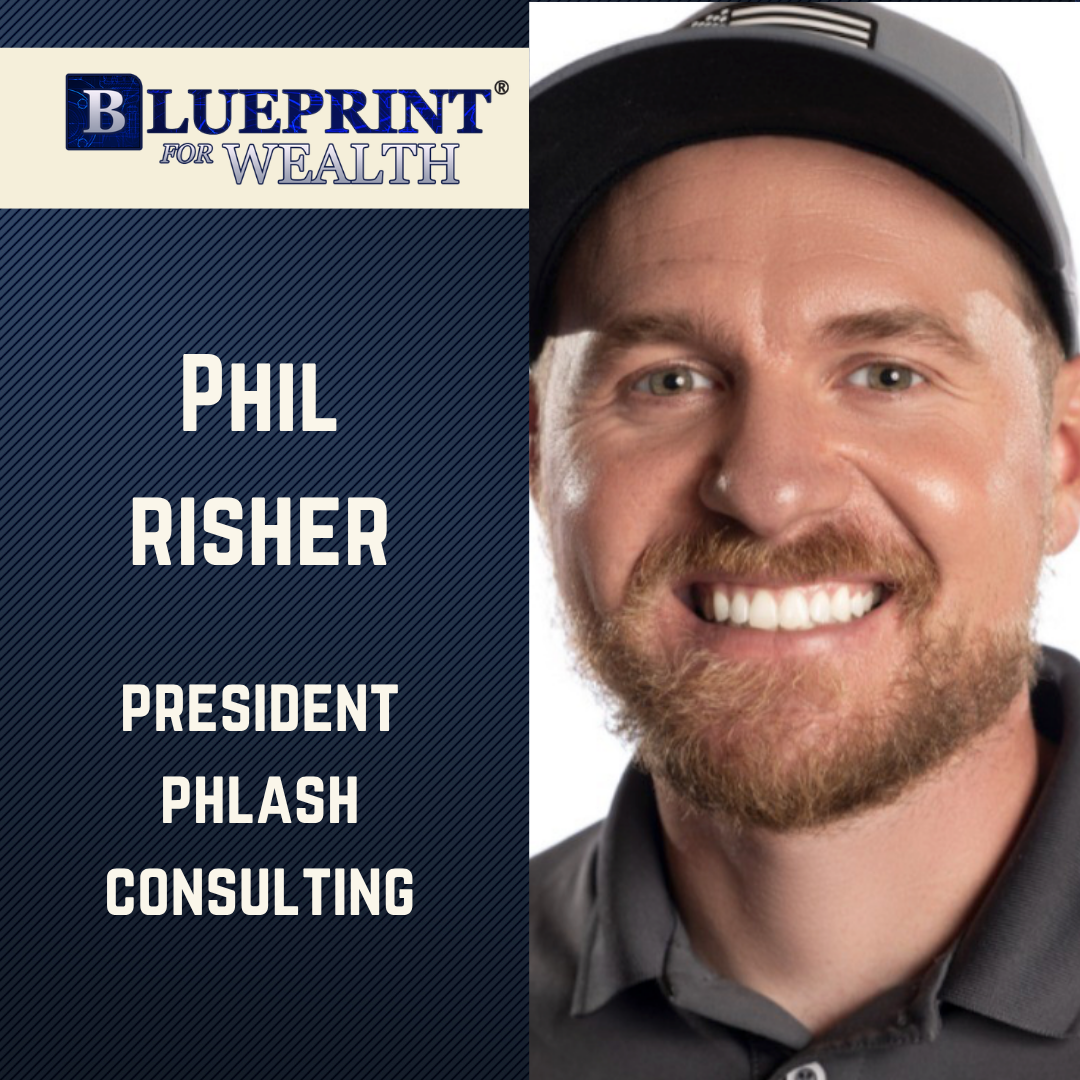
Wayne Zell and Phil Rischer discuss digital marketing for home-service businesses: lead management, nurturing clients, balancing traffic sources, and scaling. Phil outlines key CRM/lead tools and stresses a unified marketing-sales team. They cover operational efficiency, success metrics, lead quality differences between marketing and sales, and business growth and exit planning.
Key Points
Effective digital marketing for home service businesses hinges on tracking return on ad spend, managing leads efficiently, and nurturing customer relationships through automated follow-up sequences.
Scaling a home service business requires replacing yourself in lower-level tasks, implementing a cohesive marketing plan, and hiring key roles such as customer service representatives and salespeople.
Measuring success involves tracking leads, jobs, estimates, total revenue, and new customers year over year to identify areas for improvement and ensure sustainable growth.
Timestamps
0:00 Introduction and Phil Rischer's journey into digital marketing
5:28 Digital marketing strategies for home service businesses
9:56 Lead management and client relationship nurturing
14:23 Balancing traffic sources and scaling challenges
17:55 Tools for CRM and lead management
20:22 Building a marketing and sales team
21:28 Operational efficiency and success metrics
24:02 Marketing vs. Sales and lead quality
24:48 Business growth and exit strategies
27:18 Closing remarks and acknowledgments
Quotes
Most companies don't have a lead problem. They have a lead management problem.
- Phil Risher
Once you get to a million to go from 1,000,000 to 10,000,000, the hustler has to die and the leader has to be born.
- Phil Risher
You gotta hire an admin person. A lot of times, people in home service, they don't hire an admin person.
- Phil Risher
Transcript
Wayne Zell: Hi. This is Wayne Zell, and welcome to Blueprint for Wealth, your very fast paced videocast that's designed to help you and other entrepreneurs realize your personal dreams of wealth and freedom. And today, I have with me my very special guest, Phil Rischer. Phil, welcome to the show.
Phil Risher: Yeah. Wayne, thanks so much for having me. I'm looking forward to our conversation.
Wayne Zell: Me too. And I'll give you a little bio about Phil, but then I'm gonna dig into his background a little bit more. We don't live very far from each other. We just found out, but, Phil is the owner of Flash Consulting, and that's with a p h at the front because Phil begins with a p h. Right?
Phil Risher: There you go.
Wayne Zell: So I think it's I think it's actually very appropriate, good marketing on your part. And he helps local businesses increase their sales and keep their schedules full through data driven digital marketing consulting, and I believe in that too. And after helping a 20 year old, $3,000,000 service data, service business scale up to $5,000,000 in twenty four months, that's fantastic growth, and then sell to a private equity group, Phil took that blueprint and now helps other home service businesses grow, and he's been very successful. We'll learn a little bit about some of the successes he's had. He's, his efforts in technology and small business have been featured in Jobber's masters of home service, Forbes, CNBC, Yahoo Finance, and The Wall Street Journal.
Wayne Zell: So, Phil, first of all, tell us where you are today in terms of geographics and where you are in terms of your practice and where you came from originally?
Phil Risher: Yeah. So I'm born and currently live in Maryland outside of Washington DC. And I didn't start in digital marketing, but I made my way to digital marketing consulting. And, I got a wife and a daughter and, you know, overall, just a pretty normal guy, but I have a a cool business, and I I like to help people. That's my big thing is give the recipe and sell the cooking.
Wayne Zell: How did you get into digital marketing? What what were you doing before, and how did you, morph into that?
Phil Risher: Yeah. When I stopped so when I came out of college, I was international business major, and I ended up, actually, I I graduated, and I didn't have any real job. I had an internship at Enterprise Rent A Car. So I started working there in their management trainee program. And so in the first four years out of school, I ran a a local service business doing, you know, 2 or $3,000,000, got paid off the bottom line.
Phil Risher: And then I read a book a book, Rich Dad Poor Dad, and he talked about, hey. The number one skill you can know how to do is sell. So I said, I wanna go sell. So I went in to their corporate office and I sold fleet management services to home service companies. So companies like large HVAC contractors that have a bunch of fleet vehicles.
Wayne Zell: Yeah. Sure.
Phil Risher: None of that has to do with digital marketing.
Wayne Zell: You know, but that's pretty cool because you learned how to sell. Enterprise has a really good, management program from what I understand.
Phil Risher: Yeah. Absolutely. I was one of the top branch managers, so I learned how to run a local service business through their program, and then I learned how to sell to home service businesses through my corporate experience. One thing in between all of this was I'm a big Dave Ramsey guy, financial peace, pay off pay off debt, that kind of stuff. When I came out of college, I had $30,000 in student loans, and I paid that off in the first twelve months out of school working at enterprise.
Phil Risher: Then I saved up for the next two years, and I bought a condo with cash when I was 25. All just by working working at enterprises, you know, grinding. Well, my wife is a kindergarten teacher, and her friends were like, hey. How did you do this? So I started a website.
Phil Risher: I built a WordPress website, blog. I learned how to do social media marketing, SEO, email marketing, and I started driving a bunch of traffic to my website and teaching people how to pay off student loans. Same time, I was working at enterprise selling fleet management services. So I got featured in a bunch of cool stuff. I was on the radio, news stations, all, like, the local stations that you would know Yeah.
Phil Risher: And and and big, you know, publications and stuff. So I would go to these meetings with these business owners and say, what are you doing for marketing? And they would say this, and I was like, well, you know, was just featured in CNBC or, you know, Wall Street Journal, whatever. So I started talking with them. Well, I ended up I didn't like working in corporate.
Phil Risher: I'm I like, you know, getting out, doing cool stuff.
Wayne Zell: You're an entrepreneur.
Phil Risher: Yeah. Exactly. Exactly. Literally, that's what it is. So I quit my job, and I'm like, I'm gonna go full time on this blog thing and do digital marketing and, like, build up this blog.
Phil Risher: So I bought a tiny school bus, and I made a little tiny home. And I traveled around the country with my dog just making content, doing news interviews, creating YouTube videos, blogging, emails, all that stuff. And I basically just, like, learned how to do all this.
Wayne Zell: Okay.
Phil Risher: So when I came back from that trip, one of my clients was that home service business owner that was doing $3,000,000 right at the top that you mentioned.
Wayne Zell: Mhmm.
Phil Risher: And he was following me on Facebook because I built really good relationships with these guys. So he knew I was coming back. He knew I was a killer, and he was like, hey. I want you to come work in my business and help me grow. So when I went to work there, all my worlds collided.
Phil Risher: My local service business experience with enterprise of running a home service business, like specifically how to do it, how to grow, And then my digital marketing experience of, like, how to get people to your website and convert them into leads and then nurture those leads with emails and then get them to convert into sales. All those things came to a head. And in the first year, he grew 3 to 4,000,000, and then the rest, you know, I I got at it from there.
Wayne Zell: So give it give me some examples. I mean, you made an ex one example was an HVAC company. What are other home service companies that you work with and that you can represent?
Phil Risher: Yes. So typical, like, HVAC plumbing, electrical, gutter cleaning, electrical yeah. Electrical gutter cleaning, restoration contractors.
Wayne Zell: Yeah. Roofers. Right?
Phil Risher: Yep. So with roofers, we do work with roofing contractors, but, ideally, we want a company that is not just a one and done service.
Wayne Zell: Okay.
Phil Risher: Because roofers, it's like, get a lead, you sell the lead, you get a roof on, and then you gotta wait twenty or thirty years. With other home service business, there's this whole extra part to it of, like, retargeting, cross selling that we really like to get into that, which is unique to a digital marketing company.
Wayne Zell: So restoration work, home improvement work, outside, inside, you name it. So
Phil Risher: Yeah. Landscaping, hardscaping.
Wayne Zell: Yeah. I work with those types of companies too. And I think, the ability to teach them how to digitally market is really, really important. What if you had to say what the most critical digital marketing shifts that you made to help your clients scale past, say, 6 figures in revenue up to 7 and beyond. Yep. What what are those shifts?
Wayne Zell: What what what did you teach them? What did you teach yourself, really?
Phil Risher: There there's three in particular.
Wayne Zell: Okay.
Phil Risher: First first is on the visibility side of getting new customers. That's usually the first pillar. But the thing inside of that pillar that people need to solve is return on ad spend. Most of these companies are spending money on Google Ads, Yelp, Meta, Angie, whatever, but they don't know if it's actually producing revenue. They just have a gut feeling that is generating leads, but they don't tie it all the way through to return on ad spend.
Wayne Zell: Okay.
Phil Risher: So when I went to work at at this home service business, they were spending $3,000 on Google Ads, 2,000 on Yelp. And I'm like, okay. This is great. But how do we know if this is actually turning into real leads and real revenue? And this is the part that most companies miss.
Phil Risher: In their CRM, their client relationship management software, there's this whole host of data that's sitting there that they don't use. So what we solved was we figured out how to get Google Ads leads, return on ad spend every single month. So then we knew we're spending $2,000. We made 20,000. Let's do more of that.
Phil Risher: This is the thing that we have to solve in every single business because it's one of the easiest levers to pull and say, let's do more Google. Let's do more Yelp. Let's do more Meta. But if we don't know what's working, we don't know what to pull.
Wayne Zell: So the the data that you're talking about mining is the the identification of where the lead is coming from specifically.
Phil Risher: That's right. And tying it all the way through to return on ad spend. Because in home service, it's like you got a lead. You go out there next week. You give them an estimate.
Phil Risher: You wait three weeks to get the estimate. Then you go out there another week to do the job. Then you have to you know, another month later, you have tie it all the way back to the actual starting point. And most people, they it loses, you know, what is actually happening and what's generating revenue for them.
Wayne Zell: So one of the things that I run into as a as a marketer when I'm doing digital marketing, I know how much I spend on the advertising or on the, you know, whatever, pay per click or whatever it is that I'm doing. Right. But what we don't track very well is the amount of time that it takes to follow-up, to spend time with somebody to convince them to hire you, how do you build that into your ROI model?
Phil Risher: Yeah. Great question. This is the second thing that we solved.
Wayne Zell: Okay. There you go.
Phil Risher: So so most companies don't have a lead problem. They have a lead management problem. The leads are coming in from all over the place, and they might call them one time or and then it's just gone. So when I was at this home services, we would get forty, fifty leads a day coming. And we had four customer service representatives trying to manage all these leads.
Phil Risher: What they would do is print them out, put them on their desk, make a check mark next to it when they call them, write l m, left message, and then they had a stack of stuff, you know, trying to man yeah. Exactly. So what we do is we we we build a process to streamline this. The way that this looks is when someone fills out a form on your website, they automatically get a text and an email. And the text would say, hey, Wayne.
Phil Risher: Thanks so much for reaching out. If you could share some more pictures or information about your project, please text them over. Now you initially move to the next step with them right away. A lot of times, you have to wait till Monday morning, 8AM when your CSR gets in. Hopefully, they call them.
Phil Risher: They don't answer. The lead's gone. So the speed to lead piece of getting directly to them helps speed up that ROI piece of the back and forth and getting stuff going. Yeah. Then then what happens if if they don't respond or something happens, you put them into another nurture sequence, which is, like, fourteen or twenty one day follow-up sequence.
Phil Risher: Hey, Wayne. Are you still interested in getting this done? Hey, Wayne. You're still having problems with your gutters? Hey, Wayne.
Phil Risher: You're still having issues with your AC, and you're just keeping following up with them. Nine times out of 10, that's one of the biggest solutions for companies is just put a lead management plan in place so you can keep track of your leads.
Wayne Zell: Is it automated? Yeah. And so how do you distinguish between somebody who's asking for help with their gutters versus help with their painting versus help with whatever?
Phil Risher: Yeah. So a good automation software, what we do is, like, let's say someone fills out a form.
Wayne Zell: Okay.
Phil Risher: On their form, they'd select the service that they want, then they go into that bucket, then they get certain automations. If it's a phone call, same thing. You just put them in the right bucket, and then they go through the right automation.
Wayne Zell: Brilliant.
Phil Risher: Absolutely. The the other piece of this that most people miss is in estimates. So with home service businesses, they're sending out a bunch of estimates. They leave it to the owner or maybe one salesperson to follow-up on estimates. They should have a estimate process for rehashing or following up on their estimates as well.
Wayne Zell: So how do they know what how to estimate something without actually seeing it?
Phil Risher: Well, you they would wanna go out and do an estimate.
Wayne Zell: So Oh, okay.
Phil Risher: The lead nurture process is to get them on-site to give an estimate.
Wayne Zell: Yeah.
Phil Risher: For my for the industry I was in was duct cleaning. We had kinda standardized pricing. But if you don't have standardized pricing, you gotta schedule that estimate to go out, but then you need an estimate nurture sequence on top of it.
Wayne Zell: Got it. Got it.
Wayne Zell: Yeah. So the you've developed a a process. You've automated the process, and you've made it much more streamlined. So from lead to close, it really it it makes it very fast.
Phil Risher: That's right. And the third thing, like I mentioned, there's the third thing that we fixed. This is the one that everyone misses. They get to lead the close part. That part is tight.
Phil Risher: But what they miss is that you can't get lifetime value without a lifetime relationship. They think, oh, Wayne will call me when he needs me. Wayne knows that I also do other service. No. He doesn't.
Phil Risher: So what we do is we had a company. They're an HVAC contractor. They were not reaching out to any of their clients ever before. So we set up one email every single month for twelve months, and we cross sold different services. We set up a content calendar.
Phil Risher: And in the first year, they generated $253,000 just by sending out one email every single month.
Wayne Zell: Wow.
Phil Risher: And and this is the thing that people would they have a gold mine sitting in their database. All you gotta do is just reactivate this list and get people to come back into your funnel. So it's not just new customers. It's also returning customers coming in.
Wayne Zell: Beautiful. I love it. We do that too here, and, it's been extremely valuable because it reengages us with clients that we did work twenty years ago. And they you know, we keep sending them a monthly newsletter. It's automated.
Wayne Zell: It goes out to everybody on the mailing list. We try to avoid any kind of spam connection by using, you know, specific software, and, it it really works. I mean, not everybody opens the newsletter. Not everybody opens the email. But, you know, if you get a decent open rate, you know, click through rate, then, it it does work pretty well.
Phil Risher: So That's right. We there's a common issue here in the the lead estimate nurture process that typically happens. You have these Caspers, we call them. They're friendly ghosts. They're they're nice people, but they never get back to you.
Phil Risher: And, usually, if you do an estimate process, you might follow-up with them fourteen or twenty one days, but then you're like, I'm never gonna hear from this guy again. Like, I'm done following up. This is the exact person that you wanna put into your email sequence. And we had an we had an example. They're a custom closet company.
Phil Risher: In April, this woman came in, got an estimate for $14,000. She ghosted them. She Casper them. Then wait three, four months. She got it was four months.
Phil Risher: She got an email every single month. That month was about the unique process that we use to help them solve this problem. She said, yep. I'm ready to go. Is this estimate still valid?
Phil Risher: And then she was ready to go. This is why you don't just say, oh, my customers know about this. Oh, I'm never gonna talk to these prospects again. You gotta put them into something. You pay for these leads, so you gotta get out of them as much as you can.
Wayne Zell: I love it. I love it. And, you know, you get pay you have paid traffic. You develop your own organic content for whatever the business you're in, home services or whatever. And then you have partnerships.
Wayne Zell: How do you balance the paid traffic, the organic content, and the partnerships using your current marketing engine that you've built?
Phil Risher: Yeah. It it all has to do with the different business that you're in. So for example, like, HVAC. Let's say you're in a really competitive market and you're just starting an HVAC business. There's no way that in SEO, you're gonna be able to compete against these behemoths that have thousands of Google reviews and have been doing SEO for years.
Phil Risher: So that doesn't make sense. Then you might have Google Ads. Okay. You might be able to run Google Ads or Meta or Yelp, but that's gonna be expensive. And you're gonna be pay you're gonna be praying to the Google gods saying, please send me leads, and it's a black hole of money that you're never gonna see again.
Phil Risher: But in this specific instance, b to b partnerships is a great way to grow your business. One, because it's free, you can build a a a relationship with a complimentary service and get referrals coming in that are warm leads. Instead of paying Google for the leads, you pay these b to b partnerships for a lead, and then you start getting leads coming in and you build almost like a sales army for you. So kinda to answer the question, it depends on every single business mix of what they need. But overall, most businesses, if it's not super competitive, we just do all three and then they all perform pretty well.
Phil Risher: It's just about tracking your return.
Wayne Zell: Got it. Got it. I love it.
Wayne Zell: So what what are the mistakes that people are making that keeps them below that million dollar marker or higher?
Phil Risher: Yeah. Really, there's a there's a saying. To get to a million dollars, you have to be a hustler. You gotta hustle it out. You gotta figure it out.
Phil Risher: Once you get to a million to go from 1,000,000 to 10,000,000, the hustler has to die and the leader has to be born. And what happens is specifically in home service is there's these replacement rungs. There's a really good book called Buy Back Your Time. And he has these replacement rungs, which is you gotta hire an admin person. A lot of times, people in home service, they don't hire an admin person.
Phil Risher: They hire a technician first to go out and do the work, and then they still do all the $10 tasks, the admin stuff. So good home services that are scaling have a CSR customer service rep office manager as admin. Then they have their delivery type, so they they don't just default to them being the technician mindset. They have technician. The third one is marketing.
Phil Risher: So a lot of times, under a million, they have cookie cutter or fragmented marketing. They're they they pay this company over here to do some Facebook ads. They pay them to do some SEO, but it's not a cohesive marketing game plan. It's just random people doing random stuff. So you gotta get a company that ties it all together.
Phil Risher: The fourth rung is sales. Usually, they are the number one salesperson. They go on vacation or sick or out. The business falters. So you gotta replace it and get another salesperson in there.
Phil Risher: You could still do the sales, but you can't be the only salesperson. So those are the main things. Like, it it sounds simple in practice. It's hard to implement, but a lot of times people bottleneck themselves because they don't replace themselves in those specific areas.
Wayne Zell: So getting a good customer service person who's not that expensive that takes over those lower level, low cost tasks, getting a replacement for the salesperson, and then getting the technicians obviously involved.
Phil Risher: Yeah. And getting getting a marketing plan
Wayne Zell: And a marketing plan.
Phil Risher: The the reason the marketing plan is I mean, obviously, that's what I do, but the biggest things that we miss here is you have a marketing team, but they're not using your data in your CRM to make decisions. And then they're not using automations to tie it all together.
Wayne Zell: Okay.
Phil Risher: They're just doing marketing. You need someone that does marketing, data, and automations to pull it all together to make sense.
Wayne Zell: Are there certain CRM, programs or apps that are better than others for this purpose?
Phil Risher: Yeah. So Jobber is I'm I'm I work a lot with Jobber. I've been on their podcast a bunch. They're a great one for someone that's gonna go from, like, zero to, like, $4,000,000 in revenue.
Wayne Zell: Okay.
Phil Risher: There's sweet spot. There's Housecall Pro, which is another good one, and then ServiceTitan, which is a billion dollar company that typically is, like, 3,000,000 plus revenue companies would work with ServiceTitan. Those are the big three.
Wayne Zell: And and do these programs have the full, complement of, tasks and, the ability to to continue the, the digital marketing and measure all the digital marketing that you're doing?
Phil Risher: No. So this is the problem is that those CRM comment those CRM softwares are dispatch softwares. Their software is specifically designed for you got a job, put it on a calendar, go out, do the job, give them an estimate, invoice it, And it's just dispatch software.
Wayne Zell: Okay.
Phil Risher: The problem is is that companies really need some type of a lead management software to manage their leads and then put it into their dispatch software. Inside of these platforms, you can finagle some reports to get the data out. Yeah. But this was the secret sauce that I figured out in in the home service business that once I was able to get these reports and put all the stuff together, then I really was cooking with all the stuff moving parts. And, I mean, I have I have videos on how to do it on YouTube and all that stuff.
Phil Risher: But Yeah. Basically, it's not easy from what what you're asking. It's not like, oh, here's your report of your campaign summary report that shows you all the data here. You kinda gotta figure it out and piece it together.
Wayne Zell: The lead management software, you built that?
Phil Risher: So there's a couple different solutions we pull. There's some out of the box ones like Chirp and Hatch. Those are the big ones that people use. There's also HubSpot, which I wouldn't recommend for home service, but it's one that's well known. We use a tool called Go High Level, and we white label it.
Phil Risher: We call it Flashlight. And it's more designed for marketing agencies. Like, we have a full time developer on the team who builds out our Flashlight stuff, but there's there's solutions for everyone. It just depends on how custom you wanna make it and what you wanna do.
Wayne Zell: How big is your team?
Phil Risher: We have 14 people on our team.
Wayne Zell: Okay. And how do you how have how have you scaled your business so that you are not chief, you know, cook and bottle washer.
Phil Risher: Yeah. Yeah. For sure. So for us, it was like about twelve months ago, I read this book, Buy Back Your Time, and I read it four times because it scared me. And it was like, gotta hire as a, you know, an admin person to help you with your stuff.
Phil Risher: Then you gotta hire a director of digital marketing. Then you gotta hire some marketing people to help the marketing people. Then you gotta hire a salesperson. So slowly, I've been buying back my time. In April, so a couple of months ago, I took a whole week off, and I didn't look at my Slack, email, phones, nothing for the whole week.
Wayne Zell: Okay.
Phil Risher: And I told my team, like, I I basically planned it out that I'm gonna be out, and my business ran perfectly. When I came back, I had a, you know, a couple of prospect meetings and ready to go and new clients coming in. For business owners out there, what I would recommend, there's a book called Clockwork by Mike Michalowicz. And in the book, he gives you a challenge. And the challenge, Wayne, this changed my whole mindset was, Wayne, in twelve months, you're gonna be off for the whole month and you can't look at anything.
Phil Risher: And so now you have to reprogram everything that you're doing every single day. You're not gonna be able to do that in twelve months. So someone has to do this. Who's gonna do it? And it forces you to to figure out who's doing this thing.
Phil Risher: That really helped me a lot streamline the business and not be the bottleneck and be in it all day and every day.
Wayne Zell: You know, it's not just for home services. It's not just for marketing. In in law firms, it's also an issue. You know? And I have that issue myself, which is why I joined Fisher Broyles, a big a big distributed law firm, so that I would have other people to help me do the things that I normally spend time doing, but it's not the most efficient use of my time or the best use or my favorite use of time.
Wayne Zell: And so getting people to do the things that need to be done quality in a quality manner is really important, but you don't have to do everything. And I think you're you're on the right track. It sounds really good. How do you measure success beyond leads then? So what metrics or indicators are you using to move that needle so that your clients are all in seven figures and beyond, maybe eight figures?
Phil Risher: Yeah. Yeah. We have clients in eight figures. Great question. And there's five of them.
Phil Risher: And this is very important for businesses. Most businesses miss this. And especially for, like, a marketing perspective, you wanna track these numbers. The first one is your leads. You gotta make sure that you count your leads year over year.
Phil Risher: So not just lead count. You wanna say, last July, I had 80 leads. This July, I had a 100 leads, so I'm growing 20% because you gotta start there. The second one is jobs. Like, okay.
Phil Risher: I got a 100 leads, but how many jobs did I go out on or give or, you know, go to give an estimate or do those jobs?
Wayne Zell: Right.
Phil Risher: The third one is estimate count. This is the number one thing that anyone can track is how many estimates that you're doing. Because you could get a bunch of leads, but they're not good quality, and they're not gonna turn into estimates. And estimates is the number one way that you can grow your business. Because if you just generate more estimates, all you gotta do is close them, and then you're gonna then you're gonna grow.
Phil Risher: So estimate year over year. The fourth one is your total revenue. Obviously, you wanna track that year over year. And the last one is new customers. New customers is so important because it's not just returning customers coming back in.
Phil Risher: You're paying money to get new customers. How much are you getting year over year? As a digital marketing company, we actually go into our client CRM and pull out this data every single month to track our performance because we wanna know we had an example of an electrical contractor that we work with. We helped him get double the number of estimates. So he would just do in 70 and he did one forty, but he only closed 30 each month.
Phil Risher: Last year, he closed 30. This year, he closed 30. So that tells me his sales process is broken. He needs to fix his sales process, either hire a salesperson or come up with some better process, but it's not a marketing issue. It's a sales issue, so let's figure it out.
Wayne Zell: How do you distinguish between marketing and sales? I always like to ask that question.
Phil Risher: Yeah. Well, in that example, it's like, okay. You doubled your number of estimates, but you closed the same amount. So you gotta fix your sales process. We could help you with some estimate nurture sequences or whatever, but at the end of the day, that's a sales issue.
Phil Risher: It's not a marketing issue.
Wayne Zell: I I I know what you're saying. How do how do you distinguish between a good lead and a bad lead? That's the other question I always
Wayne Zell: run into.
Phil Risher: Yeah. Lead to estimate. A good lead is someone that generates an estimate. A bad lead is just the lead that doesn't turn into an estimate. That's why we track those numbers.
Phil Risher: Because let's say you got a 100 leads, but you only did 20 quotes. That's 20%. You should be getting at, like, 50% at least.
Wayne Zell: Got it. Got it.
Wayne Zell: Well, what's next for you? I mean, where do you see your business growing, and how do you see it evolving? And what's your succession, strategy?
Phil Risher: Yeah. For sure. You know, I'm young. I used to I told you before, like, I'm a debt free guy. You know, I used to have this crazy thing that I would say, like, when I'm 40, I'm gonna retire.
Phil Risher: I'm gonna be done. And I think that was mostly from a place of scarcity where I didn't like what I was doing, and it wasn't fun for me. And it's just, like, more about money.
Wayne Zell: Yeah.
Phil Risher: Now it's more about purpose and goals and using my talents to add value to people. So for right now, I love what I do every single day. I love the team that I have. You know? Money is great, but at the end of the day, I think it's about purpose and what you're doing.
Phil Risher: So for us, we're just on a growth path. You know, we're trying to get to 10,000,000 revenue, build out a great team, build out a great culture. We actually just won Inc. 5,000 best workplaces, which is, yeah, a really cool really cool
Wayne Zell: high honor. That's a very good honor. Thank, congratulations.
Phil Risher: Yeah. Yeah. Thank you, Yosem.
Wayne Zell: So we're talking to with Phil Risher, and he's he's our special guest today on Blueprint for Wealth. Phil, how do people get in touch with you?
Phil Risher: Yeah. So if you're a home service business, 1 to 10,000,000 is kind of our bread and butter. And you you're like, hey. We do these free marketing audits. You can go to our website, Flash Consulting, phlashconsulting.com, and discuss your business.
Phil Risher: Also, if you just kinda like Phil seems like a cool dude, interested in what he's talking about. We have a Flash Consulting YouTube channel. I hang out on LinkedIn and Instagram, Phil Richer. And, you know, just a normal guy, easy to answer, ask questions to, talk, and, would love to meet anyone listening.
Wayne Zell: You know, this is, it's it's exciting. We'll put the, the URLs on the screen also so that everybody can write it down. But I think you've really got this down to a science. And one of the biggest mistakes that a lot of marketing firms make is that they, you know, they master SEO or whatever is hot in the in the instant, but they don't develop an entire process from lead to close and then follow-up after that. Right.
Wayne Zell: And you have done that successfully. Whether you've used other people's ideas, it doesn't matter. But you've done it for digital marketing for home service businesses. So for all of you out there, and I have many clients who are in the home service businesses, listen to this podcast again. Go back and listen to it again because Phil just gave you a whole a plethora of new ideas, and then call him and ask him to help you with your digital marketing because I think you're gonna see a difference.
Wayne Zell: He's really got it down to a science. Thank you, Phil. Thank you for being a special guest on Blueprint for Wealth today, and I wish you all the success in the world as you grow your business.
Phil Risher: Thanks, Wayne. I really appreciate that.
Wayne Zell: Alright. Have a great day, everybody. We'll see you soon.


